
A Landscape Jewel: The Story Behind Bloedel’s Reflection Pool
–Written by Jane Carlin, Volunteer
Reflection pools have been in the national news recently, prompting me to look more closely at one of the most beloved spaces at Bloedel Reserve.
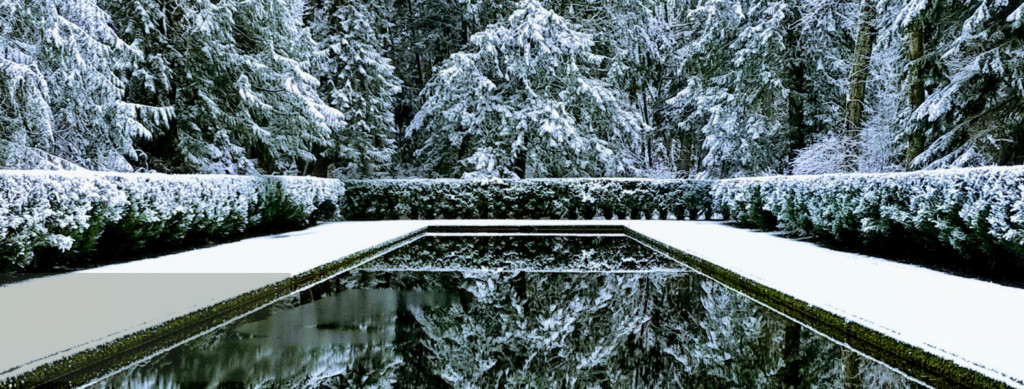 Few places on the Reserve evoke the same sense of peace as the Reflection Pool. Enclosed by its hedge, the still water and surrounding lawn create a setting that invites contemplation, meditation, and quiet appreciation. It is no surprise that generations of visitors have regarded it as one of the Reserve’s defining landscapes.
During the past year, while working with the Reserve’s historical archives, Kyle Mahoney and I uncovered a remarkable collection of correspondence, sketches, engineering reports, and photographs documenting the creation of the Reflection Pool. These materials reveal that this iconic landscape was not the result of a single inspired idea but rather many years of thoughtful planning, collaboration, and careful refinement.
Early writings about the pool described it as a “landscape jewel,” a description that remains as fitting today as it was nearly sixty years ago. In August 2003, former Executive Director Richard Brown published a detailed history of the project in the Bloedel Reserve Newsletter. This article outlined the history of the pool from its inception to completion.
Inspiration from Europe
The story begins in 1967, when Prentice and Virginia Bloedel began discussions with renowned landscape architect Thomas Church about creating a garden feature inspired by the long reflective waterways found in European estates.
Church’s initial concept included statuary, a gazebo, and ornamental plantings. As conversations with the Bloedels continued, the design evolved into the elegant simplicity we recognize today.
Among the historical documents are photographs of a “canal pool” at Bodnant Garden in Wales that were sent to the Bloedels by a friend from Vancouver. In a letter to W. C. Livingstone, Deputy Superintendent of Parks and Public Recreation for Vancouver, Prentice Bloedel wrote that the photographs “gave a much better idea of the canal pool than I had seen published in books.”
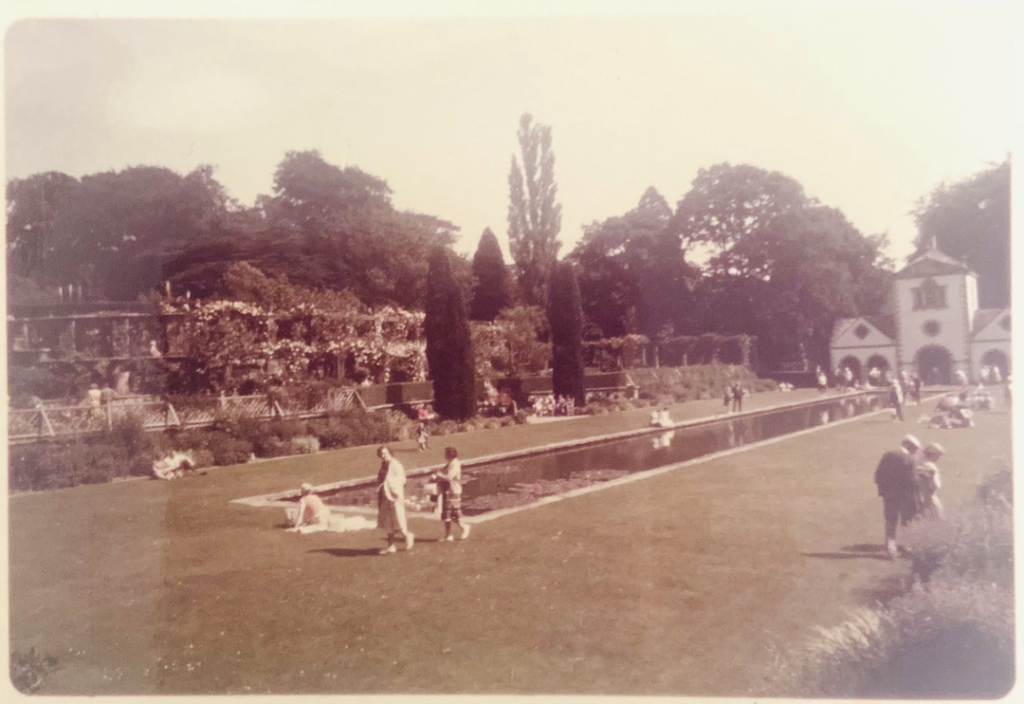
Bodnant Garden in Wales from 1970
Additional records prepared by former Executive Director Richard Brown indicate that the Bloedels also drew inspiration from a reflecting canal in Courances, France.
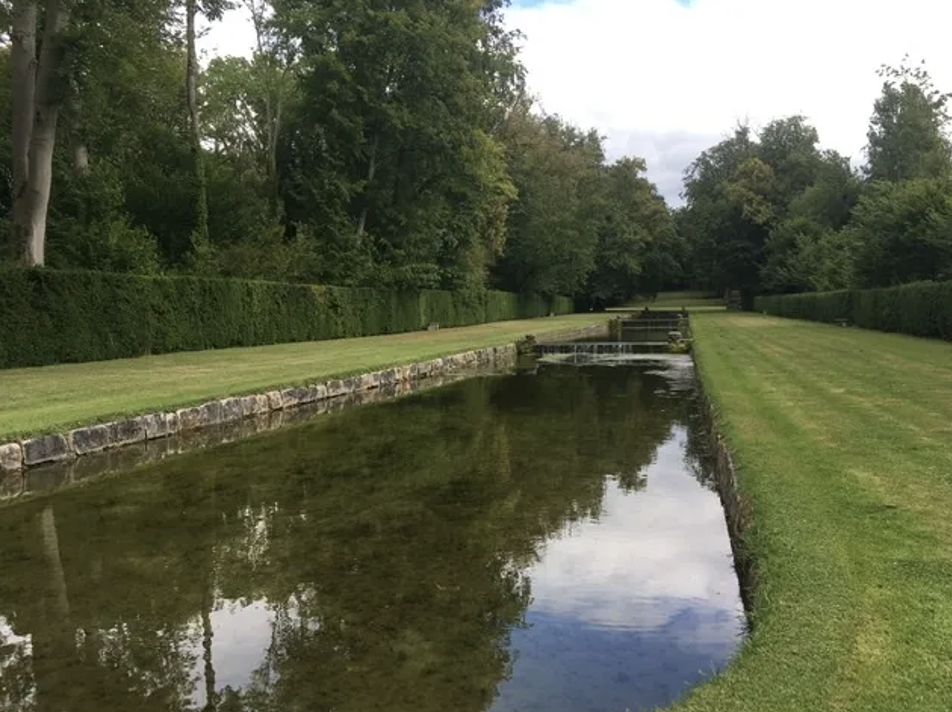
French reflection pool
Viewed today, images of both landscapes reveal striking similarities to the Reflection Pool at Bloedel Reserve.
Designing the Landscape
Thomas Church—affectionately referred to as “Tommy” in much of the correspondence—worked closely with the Bloedels to determine the best location for the pool. One of Prentice Bloedel’s greatest concerns was ensuring that water would circulate properly and not become stagnant. Equally important was preserving the trees already growing on the site.
Extensive hydrological studies, topographic surveys, and engineering reports were commissioned, including work by a local engineering firm and the University of Washington Department of Forestry.
Even after construction, the design continued to evolve.
Early photographs show graceful curved wooden benches positioned around the pool. Their inspiration came from a miniature Japanese garden exhibited at the Museum of Modern Art in New York, which Prentice Bloedel had visited. Working with Thomas Church, Bloedel developed his own interpretation of these benches and also consulted architect Paul Hayden Kirk.
The timber was obtained from Hall Brothers Shipyard in Winslow, while the benches themselves were designed by Peder Knudson of Paul Hayden Kirk’s architectural office—the same firm responsible for the Japanese Guest House at the Reserve.
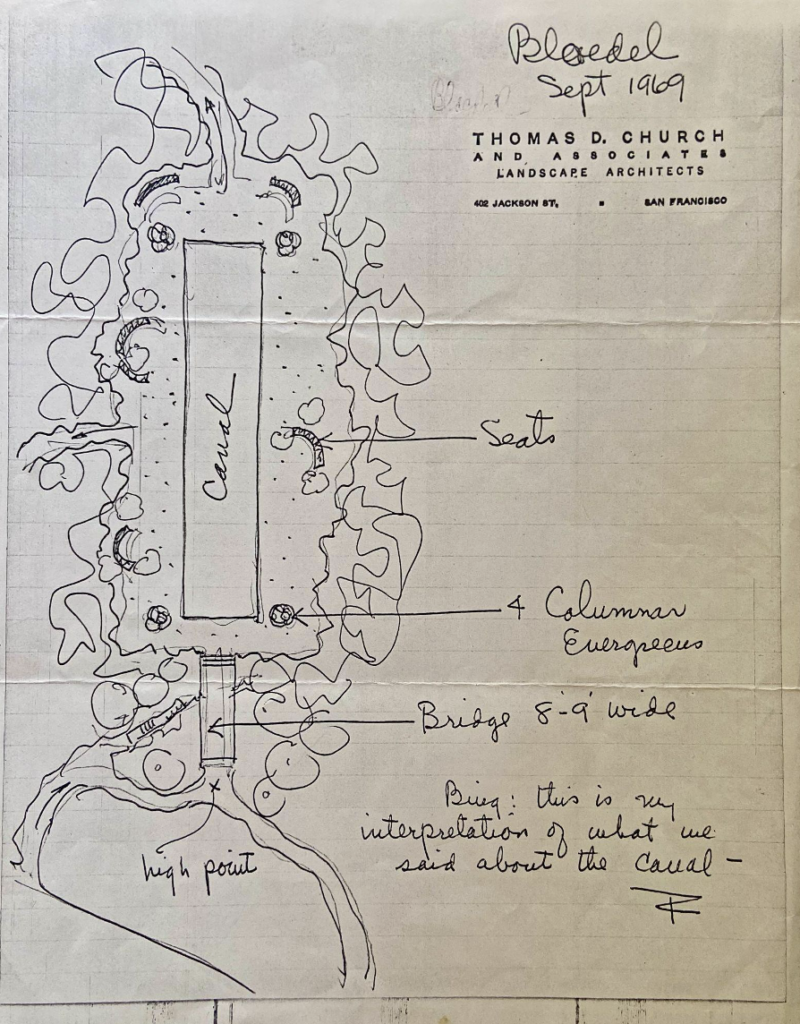
Sketch from Thomas Church dated September 1969 which shows the benches as well as access to the pool. Richard Haag was brought into the project to bring fresh ideas to design features as well as access.
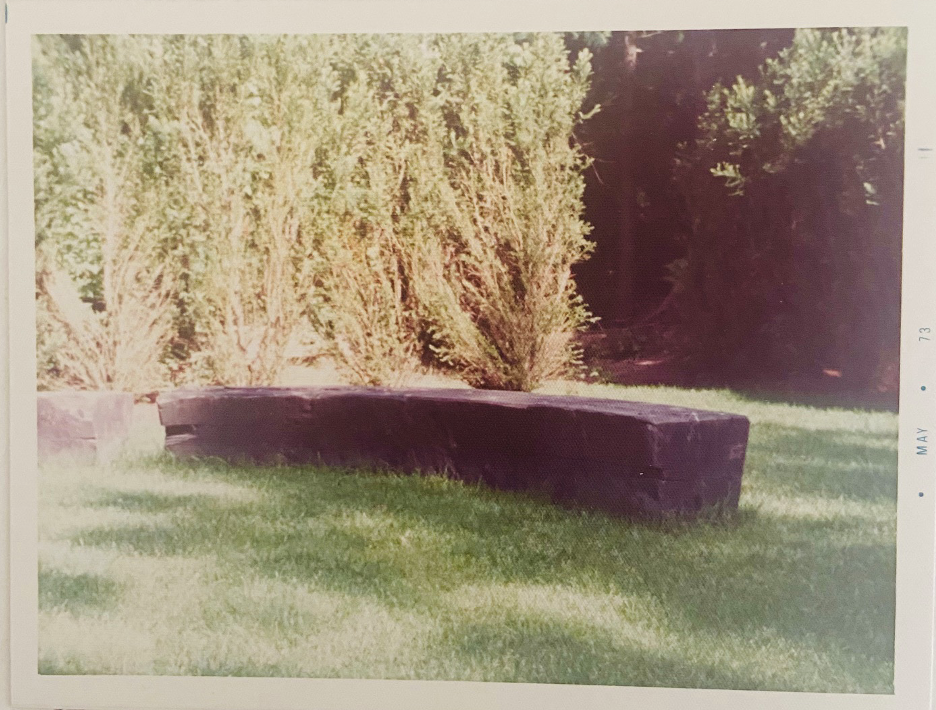
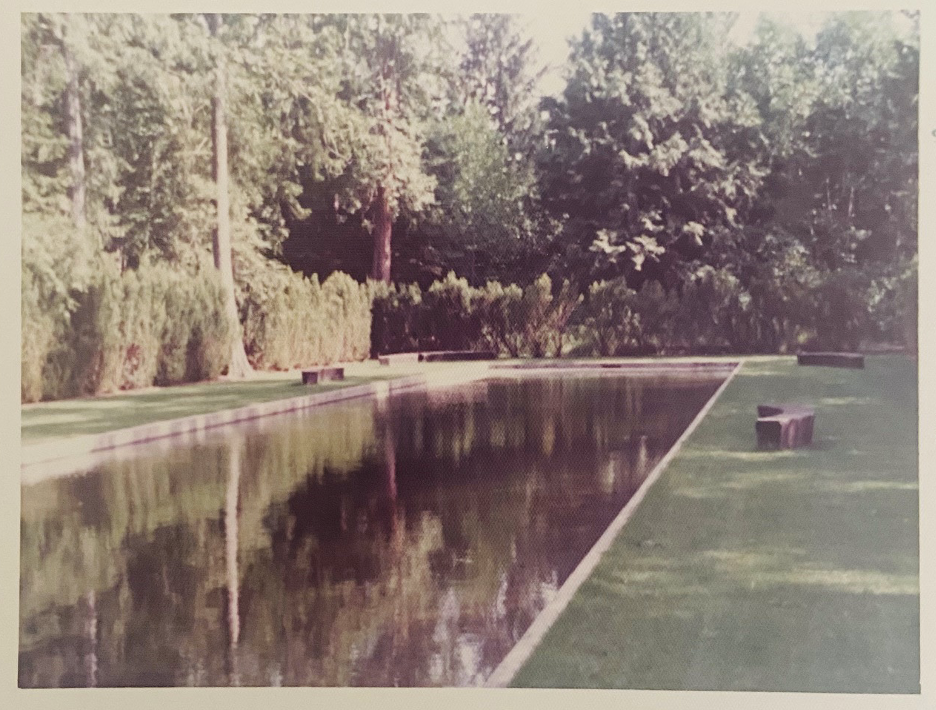
Although beautifully crafted, the benches were eventually removed after suffering extensive termite damage. Photos are dated from 1973.
Richard Haag’s Contribution
As the project matured, Prentice Bloedel sought additional perspectives, particularly regarding the approach to the pool. On the recommendation of several close friends, he invited landscape architect Richard Haag to contribute to the project.
By the late 1960s, Haag had already established himself as one of the Pacific Northwest’s leading landscape architects and was the founder of the undergraduate landscape architecture program at the University of Washington.
After touring the property in late 1969, Haag wrote to Prentice Bloedel:
“I thoroughly enjoyed the grand tour of your estate with you and Mrs. Bloedel. It was a beautiful afternoon. I have since returned to study the ‘canal pond’ under different atmospheric conditions and found it to be even more mysterious in the gray rain. However, some ideas are beginning to form in the back of my mind, and I will soon translate them for your review.”
The correspondence between Church, Haag, and the Bloedels continued for many months as they refined the landscape.
One of Haag’s most significant contributions was the enclosing hedge that defines the space today. He recommended planting Taxus baccata (English yew), creating the living walls that transform the pool into an intimate outdoor room.
Records show that 160 yews were delivered from Sherwood Nursery in Portland on February 21, 1971, followed by an additional 60 trees on March 7. By 1972, the Reflection Pool project was complete.
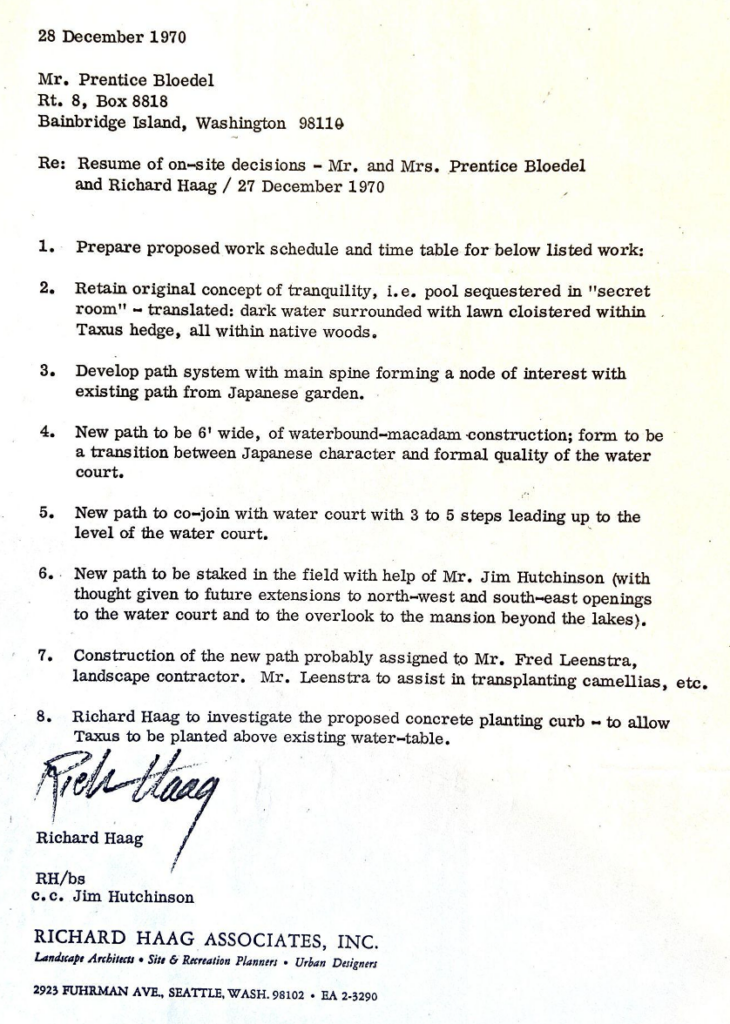
Checklist prepared by Richard Haag
A Lasting Legacy
The Reserve’s archives contain an extraordinary collection of sketches, design drawings, engineering studies, photographs, and correspondence documenting every stage of the Reflection Pool’s creation.
Richard Brown shares his observations in his newsletter article. They remain as meaningful today as when they were written:
“Gardens are more than just arrangements of plants and structures within a space. They represent the aspirations, the creativity and the tastes of their builders. In no small way, they can reflect the character and personality of the designer.”
 He concluded by reminding us that the Bloedels chose this special place as their final resting place, a testament to the affection they held for it. Brown described the original vision as:
“A tranquility pool sequestered in a secret room of dark water surrounded with a lawn cloistered within the taxus hedge within the natural woods.”
More than fifty years after its completion, the Reflection Pool continues to embody that vision. Its enduring beauty is a tribute not only to Prentice and Virginia Bloedel, Thomas Church, and Richard Haag, but also to the dedication and expertise of Bloedel Reserve’s horticultural staff, whose careful stewardship ensures that this remarkable landscape continues to inspire visitors from around the world.
Sources:
Summer/Fall 2003 Bloedel Reserve Newsletter (in print); then President Richard A. Brown prepared a detailed article on the Reflection Pool. I used this article as a principal source as well as the original source materials of photographs, drawings and correspondence. Included in Brown’s article are extensive notes associated with the technical aspects of maintaining the pool.
Original photographs and documents were also consulted.