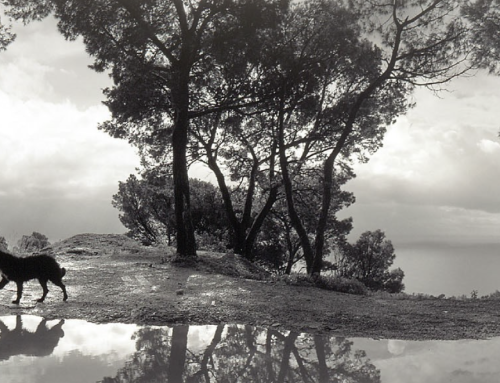

The Cutler Residence at Bloedel – A Place for Reflection
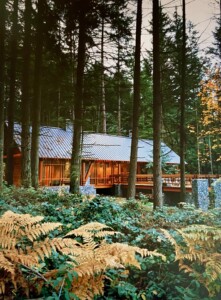 Tucked quietly into a grove of fir trees, where ferns carpet the forest floor, a home at Bloedel Reserve offers more than shelter—it offers an experience. Known as the Virginia Merrill Bloedel Education Center, this remarkable structure is both an architectural achievement and a deeply personal tribute, designed by acclaimed Bainbridge Island architect James Cutler.
A Home Rooted in Memory
In 1992, following the death of his wife Virginia, Prentice Bloedel commissioned Cutler to design a residence that would honor their life together. At 89 years old, he envisioned a place that would allow him to remain close to her memory while also serving a future purpose. Virginia Bloedel’s ashes were interred at the edge of the Reserve’s Reflection Pool—a focal point that would become central to the home’s design.
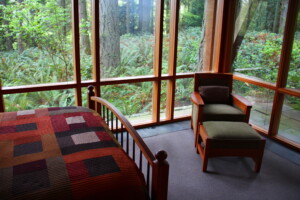 Cutler responded with a concept that embraced this memory. The residence is carefully sited so that its entry extends through the structure to a viewing deck, aligned on a direct axis with the reflection pool. Even the placement of the primary bedroom was intentional—positioned so that Prentice Bloedel’s bed would face the resting place of his wife. Stone piers anchor the structure physically and symbolically, reinforcing this alignment and evoking a sense of permanence. The beams of the central doorway are doubled, symbolizing the long marriage of the Bloedel’s and the wooden deck supported by stone piers carries the axis towards the reflection pool.
Architecture in Harmony with Nature
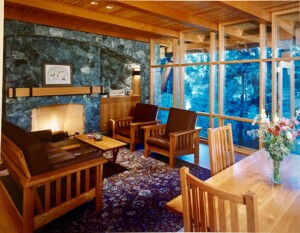 The building itself is a composition of wood, stone, and glass—materials that reflect the surrounding environment. Organized around a central living, dining, and kitchen space, the residence is flanked by two private bedroom suites, creating both intimacy and openness.
Cutler’s design reflects a deep sensitivity to the Pacific Northwest landscape. Generous roof overhangs and exposed timber beams recall early 20th-century regional architecture, while expansive glass walls dissolve the boundary between indoors and out.
A Legacy of Design and Stewardship
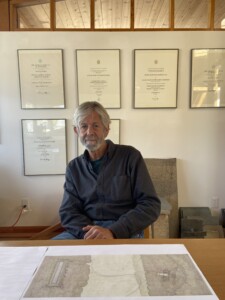
The architect in his Bainbridge Island studio.
James Cutler’s work is widely recognized for its environmental awareness and its reverence for place. A student of Louis Kahn at the University of Pennsylvania, Cutler carries forward a philosophy that architecture should express both material integrity and human experience. His career has been marked by numerous honors, including elevation to the American Institute of Architects College of Fellows and multiple national design awards.
From his early days exploring the woods of Pennsylvania to co-founding the Bainbridge Island Land Trust, Cutler has remained committed to the relationship between built form and natural environment. His firm’s work continues to shape conversations around sustainable, place-based design.
A Living Space for Creativity
Today, the residence fulfills Prentice Bloedel’s original vision in a new way. It serves as a home for the Reserve’s Creative Residents—artists, writers, and thinkers who come to the Bloedel Reserve for periods of reflection and work.
Those who stay here often speak not only of the beauty of the structure, but of its emotional resonance. The alignment with the reflection pool, the tactile presence of wood and stone, and the connection to the surrounding forest—all contribute to an atmosphere that is both grounding and transcendent.
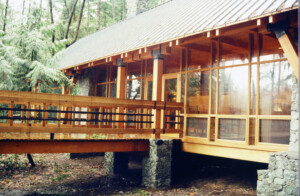 Catherine Alice Michaels, one of the former Creative Residents, shares her thoughts about how the house enhances the creative experience: “The residence where Creative Residents stay while at the Reserve was a peaceful, quiet sanctuary. I loved being tucked away, living a secret art life while visitors explored the grounds during the day. It offered me both room to work and a cozy place to relax and unwind.”
Kathleen Bullivant, long term volunteer and supporter of the Reserve, had the chance to spend a restful weekend at the house and here is what she has to say: “I enjoyed a winter overnight stay at the cozy, quiet, retreat in the woods. It was the perfect getaway to work on a creative project that had been floating around in my mind for a while. The timber building added to my creative thoughts and the light pouring in during the day certainly added to the energy to the project.”
Perspectives from the Architect
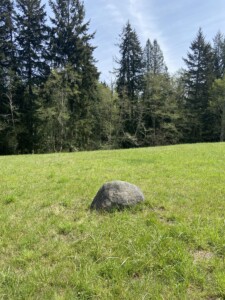
A photo of the stone as it appears today.
I had the opportunity to sit down with James Cutler in his Bainbridge Island studio and he graciously shared his perspectives on this project. When reflecting on the project, (and I paraphrase), he talked about how touched he was by the sincerity of Prentice Bloedel to ensure that the house and the location connected with the strong bond he had with Virginia Bloedel; Cutler described this as “poetic.” Cutler shared his strong belief that his approach to design connects with the power of emotion and engages us to connect with our feelings and emotions. An example of this is when Prentice travelled with him to Fall City where they selected the stone boulder that was part of the landscape marking the axis to the reflection pool. While Mr. Bloedel’s eyesight was limited, he was able to touch the stone and know it was the right one. The stone boulder still resides in the field as depicted below. James ended our conversation by sharing that the design of this residence was a milestone in his growth as an architect. I left feeling inspired, and to be honest, a bit awestruck of his immense talent and sensitive and compelling design aesthetic.
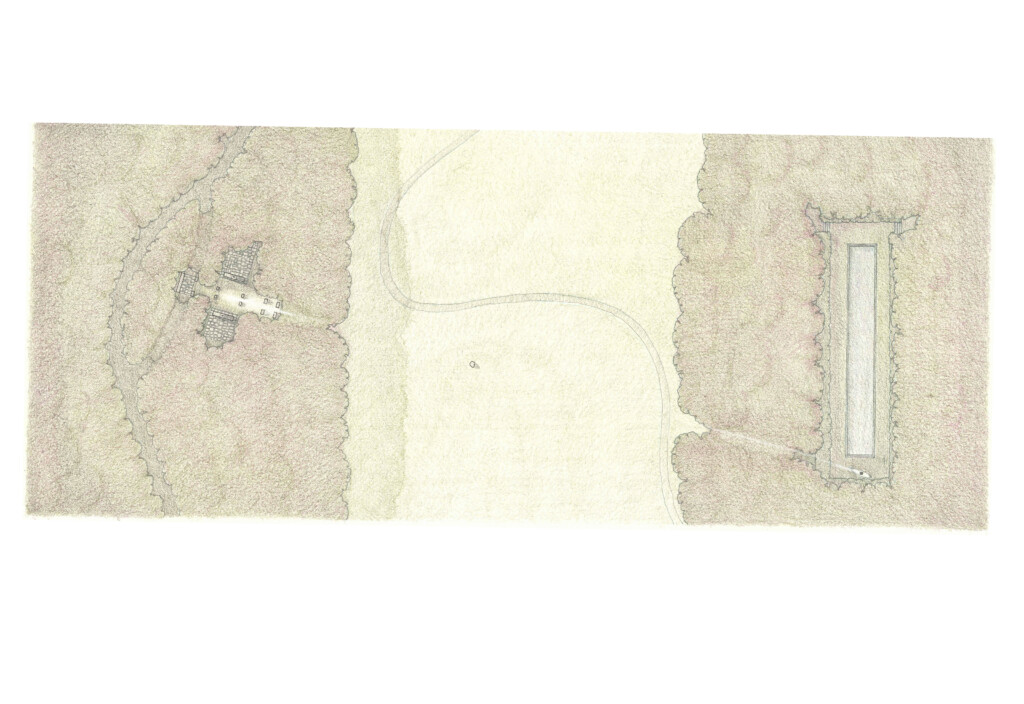
The site plan shared by Cutler with the stone marked.
The Creative Residence is more than a building. It is a testament—to a lifelong partnership, to the power of thoughtful design, and to the enduring dialogue between nature, memory, and human creativity.
–Written by Volunteer Jane Carlin
Sources:
Personal correspondence from James Cutler from Bloedel Historical Collections
Personal correspondence with Catherine Alice Michaels and Kathleen Bullivant
Interview with James Culter, April 17, 2026
Kennedy, A., Cutler Anderson Architects, Olson, S., & Morrow, T. (2008). The best of Cutler Anderson architects. Rockport
Olson, S. (2004). Cutler Anderson Architects. Rockport.