
Blood Rain, Orange Fuzz, and Carrots
 We are accustomed to rain in Western Washington and some of us are even happier during rainy days than on a hot, sunshiny day. There’s even a word for people who prefer rain: pluviophile. We like our rain and aside from its variable intensity from light drizzle to heavy downpour to brief dry season, we often take its constancy for granted. There exists a precipitation norm that we expect.
If you’ve spent enough time in Eastern Washington or other hotter, drier places, you may have encountered a deviation from normal rain. Occasionally it rains in the east side of this state. And occasionally there are dust storms; big windy storms that turn the sky brown with dust and sand. Usually the rain and dust storms do not coincide, but sometimes they do and then you get mud rain. Typically this happens just after you’ve washed your car.
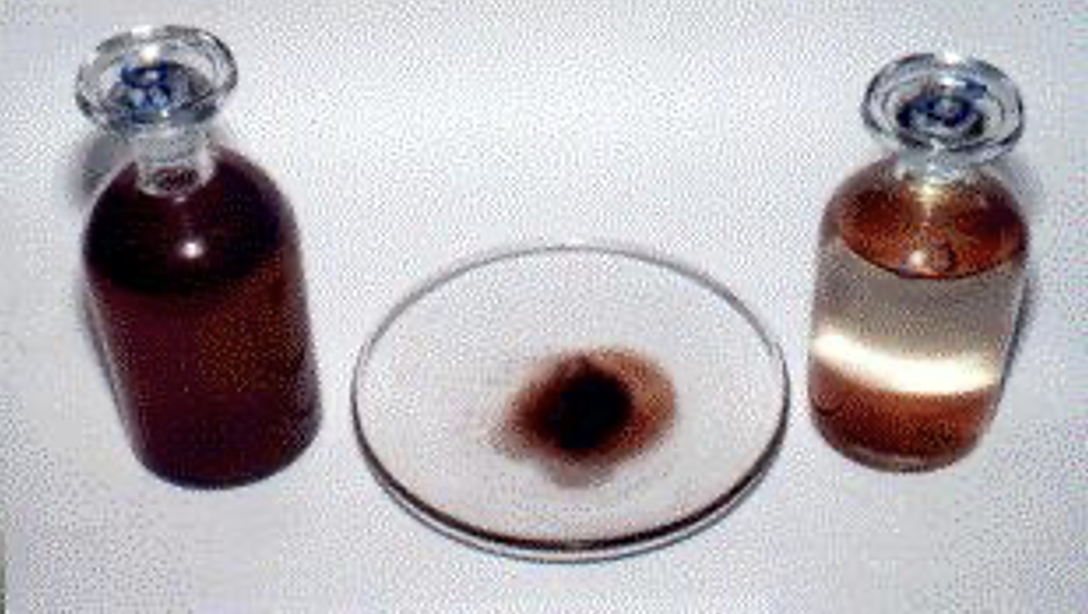
Samples of the Kerala blood rain. By Vsasi at en.wikipedia [CC BY 2.5 (http://creativecommons.org/licenses/by/2.5)], from Wikimedia Commons.
After the 2001 event, the Indian Centre for Earth Science Studies (CESS) suggested it was caused by a hypothetical meteor burst. Local residents had reported hearing a thunderclap and seeing a flash of light. The CESS later discarded this hypothesis after discovering that the red color was from spore-like particles in the rain water. In other words the color seemed to have a biological cause.
The CESS then gave a sample to the Tropical Botanical Garden and Research Institute (TBGRI) for microbiological analysis. The red particles were in fact spores and a joint report from the CESS and TBGRI stated that:
“The colour was found to be due to the presence of a large amount of spores of a lichen-forming alga belonging to the genus Trentepohlia. Field verification showed that the region had plenty of such lichens. Samples of lichen taken from Changanacherry area, when cultured in an algal growth medium, also showed the presence of the same species of algae. Both samples (from rainwater and from trees) produced the same kind of algae, indicating that the spores seen in the rainwater most probably came from local sources.”
Upon returning to the initial sample site, this alga, Trentepohlia, was found to be growing on most of the trees and rocks. Even some of the lamp posts were sporting it. The large quantity of spores being produced combined with weather conditions apparently produced the perplexing blood rain in Kerala, India.
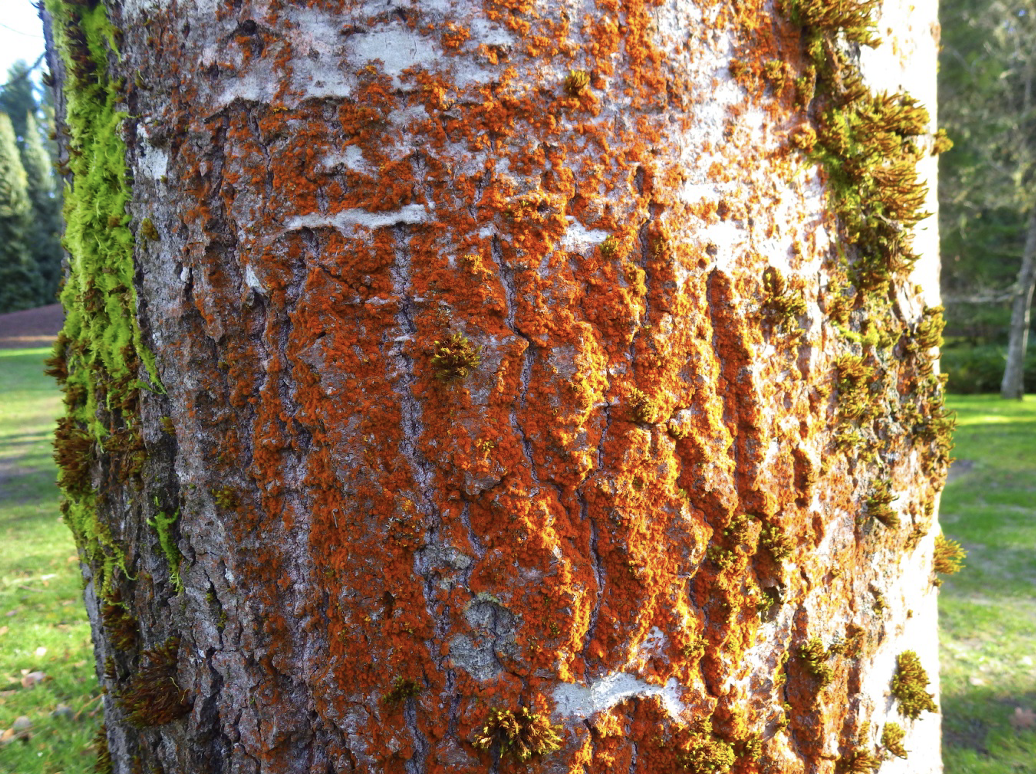
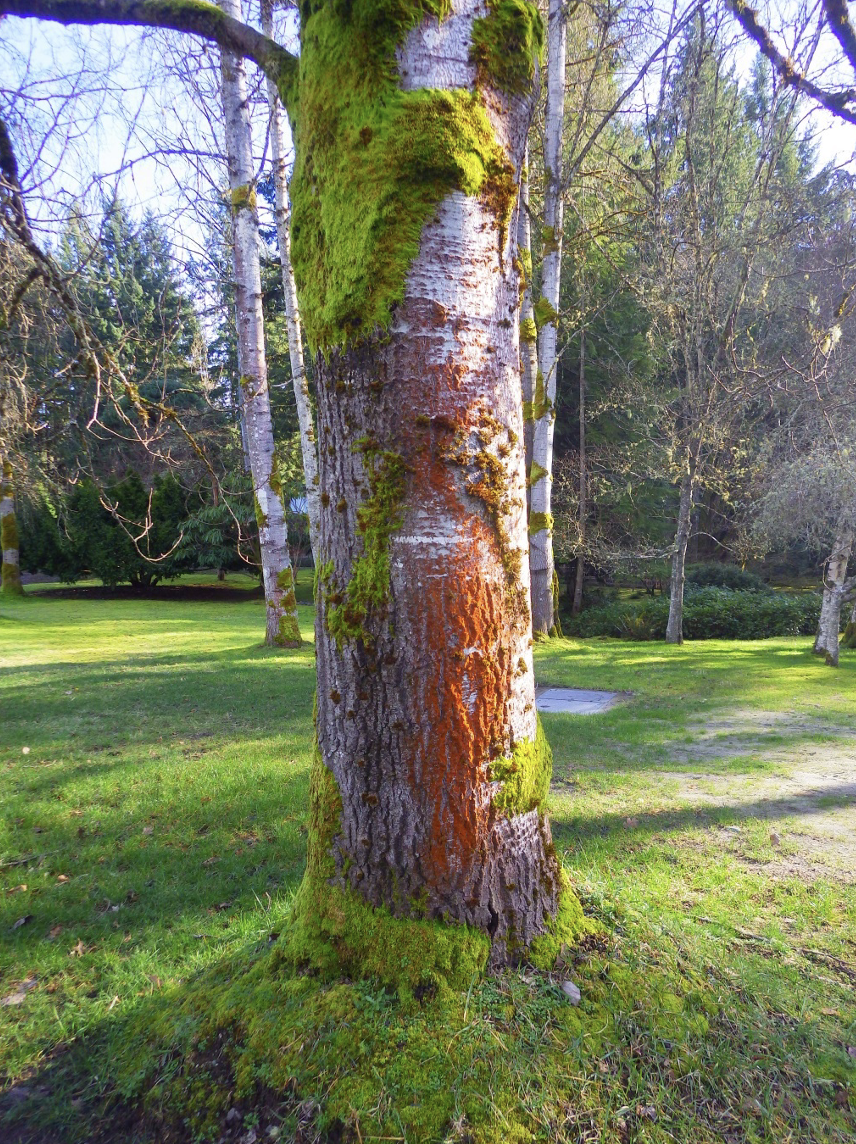 As intriguing as this story is, what does it have to do with the Bloedel Reserve? Maybe you’ve guessed by now: Trentepohlia can be found on the Reserve. It isn’t very common, but you can find it growing as orange fuzz on Aspen, Red Alder, and probably the Black Cottonwoods though I haven’t noticed it on them yet. Elsewhere in the world it may be found on conifers as well. The Monterey Cypress in California is known to support it. At Bloedel the best place to find Trentepohlia is on an Aspen tree near the road by the Japanese Garden (examine the tree trunk in the photo at the beginning of this article). It is the orange fuzz on the trunk surrounded by the white bark and green moss. Keep you eyes open and you may spot it on other trees on your next visit.
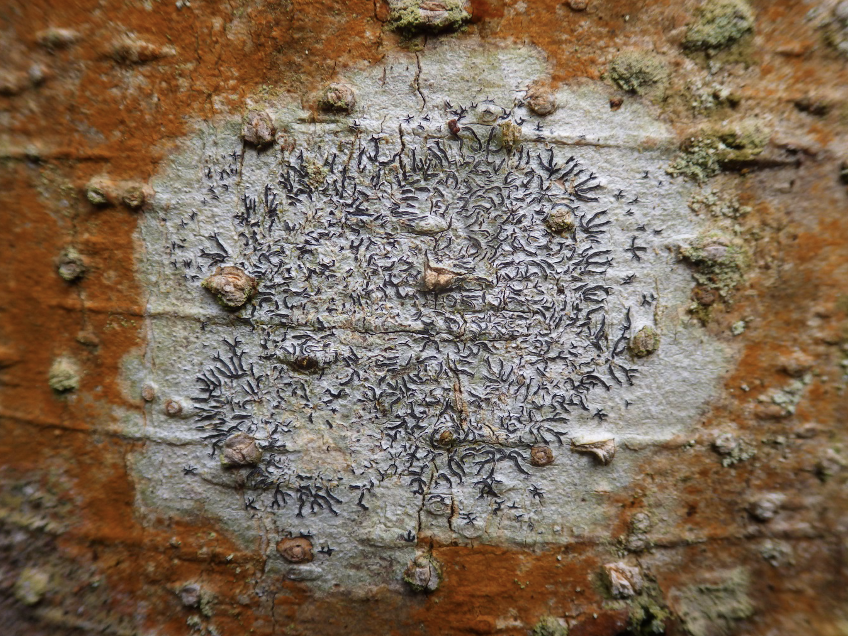
Secret Writing Lichen (Graphis stricta) on Red Alder. Trentepolia is the algal component of this lichen and surrounds it as well.
Trentepohlia is also a common algal component of lichens. Lichens are symbiotic associations between a fungus (the mycobiont component) and either an algae or cyanobacteria species (the photobiont). The fungus provides protection and support for the algae which provides food for both through photosynthesis. Via this symbiosis, lichens can colonize various tough ecological niches like rocks and trees. The bark of mature alder is typically completely covered by various lichens, producing the alders’ beautiful decorative bark patterns. One lichen genus common on Red Alder, Graphis, has Trentepohlia as its photobiont and is present on the Bloedel Reserve although hard to find. But Trentepohlia is also here in its free living, orange, fuzzy form.
Fortunately (or unfortunately?) Trentepohlia isn’t common enough in our area to produce red rain, but despite its lowly appearance, it is a fascinating organism. I love the humble little things in nature that we ignore or just don’t notice easily. The showier blooms and big trees are good at distracting our attention from the smaller elements of nature, but I think we all can appreciate the intricate lichens on alder bark or the tiny individual moss plant instead of its equally beautiful green hordes.
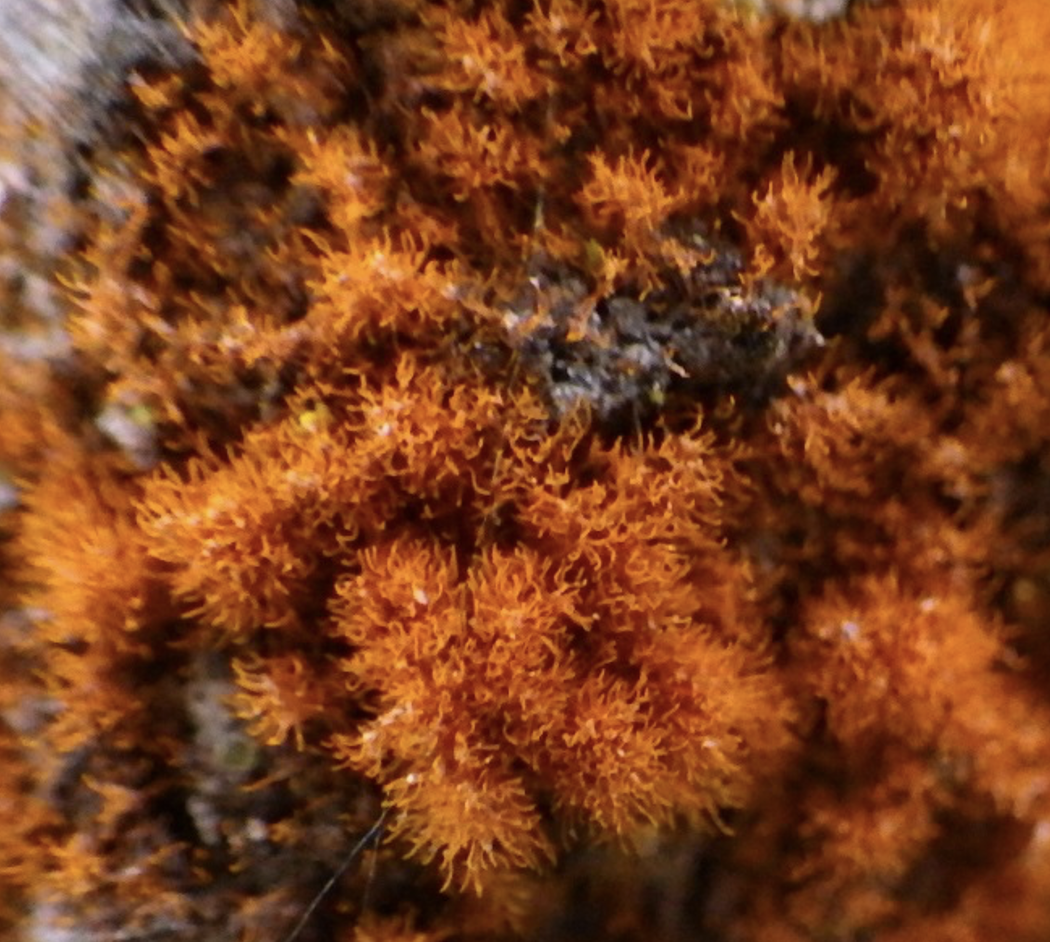 In more scientific terms, Trentepohlia is a chlorophyte, a member of a group of related algae collectively called the “Green Algae”. As the name implies, they are united by their color which is derived from the photosynthetic pigment chlorophyll. A couple questions may pop into your brain. First, if it is a green alga, why is it orange? Second, algae are typically aquatic, right? So why does this one grow on trees and rocks? And apparently on lamp posts in India?
The orange color itself comes from a group of plant pigments called carotenoids, a group you may recognize especially if you read up on food and health information. They are antioxidants and generally good to include in your diet. Carotene is often recommended specifically (eat your carrots!). They’re healthy for us and we can get them by eating our veggies. Plants have them because they’re good for the plants too. Necessary, even, for their survival.
Carotenoids range from yellow to orange to red but normally are visually masked out by the green chlorophyll. Typically, you will only see the yellows and oranges in fruits and flowers where the color is used more as an attractant for seed dispersal or pollination. Otherwise, leaves are generally green and a yellow or orange color usually denotes a sick plant or fall coloration. If you find a healthy plant (or alga) that is yellow or orange, there is probably a survival-related reason. Such is likely the case with Trentepohlia.
Photosynthetic organisms, like plants and Trentepohlia, are capable of producing their own food by combining light energy with water and carbon dioxide to produce sugars. Carotenoids assist photosynthesis in two ways: 1) they form “nets” to help capture light energy, increasing photosynthetic productivity and 2) they protect the plant cells from oxidation by free radicals, hence their reputation as antioxidants.
As I mentioned, Trentepohlia is orange because it has elevated levels of carotenoids that mask out the green chlorophyll. It is these high levels that may help this alga to exist outside of an aquatic environment. Most algae are aquatic and have not evolved much in the way of terrestrial adaptations to water loss and high light levels. Land plants have evolved such traits as roots, barriers to water loss, vascular systems, and other features that help them to survive in a terrestrial environment where water is limited. Despite our frequent rains, there are days and seasons when some environments are very harsh from an algal point of view.
Trentepohlia’s above average carotenoid levels is likely one adaptation this alga has to terrestrial life. Specifically, the carotenoids assist in dealing with elevated light levels in a non-aquatic environment. While plants need light to live and grow, light also presents challenges to terrestrial organisms. First, light increases water loss from plants. Second, light can promote the creation of highly reactive, detrimental molecules inside plant cells called free radicals. Free radicals react with and break down the cellular machinery that keeps plants alive and growing. Carotenoids are beneficial by intercepting light and shunting its energy to the cellular photosynthetic machinery where it can be used for plant growth. Also, because they are powerful antioxidants, carotenoids react well with free radicals, deactivating them to protect plant cells from harm.
Despite Trentepohlia being an alga, it can grow terrestrially because it is adapted to life out of water. Such adaptations are necessary for it to survive either free living or as part of a lichen. With these adaptations this alga and its lichenized forms can grow on trees, rocks, and lamp posts and if common enough can create the beautiful, if mysterious, blood rain as seen in Kerala, India. While such rains are unlikely here, the orange fuzz of this alga is something beautiful to see at the Bloedel Reserve, adding color to the winter landscape.
What to look for:
- Trentepohlia will look like orange fuzz on tree bark. A magnifier can be helpful but is not necessary for finding this organism.
- The most obvious colony of Trentepohlia on the Bloedel Reserve is located on an Aspen near the paved road by the Japanese Garden. This is the source of the photos in this article and it is the most robust example. Trentepohlia is also very common on Red Alder throughout the reserve. Many alders at the Bird Marsh also have this alga on their bark although the color is a little more dull and the colonies are less vigorous. I’m not sure the reason for this difference in robustness between the aspen and the alder colonies. Possibly the alga are different species of Trentepohlia or also likely there are habitat differences such as sunlight or bark characteristics that promote better growth on the aspen.
–Written by Darren Strenge, Gardens West Manager