
Mentoring the Next Generation of Landscape Architects
From the very beginning, Prentice Bloedel worked hand in hand with visionary landscape architects to shape the Reserve into a place where art, nature, and design coexist in harmony. His commitment to thoughtful design extended naturally into the realm of education, fostering a connection between Bloedel Reserve and the University of Washington’s landscape architecture program. One of the joys of working with historical materials is the discoveries we make.
Recently, graduate student Kyle Mahoney, who has been exploring the Reserve’s historical archives, uncovered documentation from that legacy—a box filled with student projects dating back to 1981. These works, created long before the advent of the Internet or digital design tools, are a testament to both the enduring influence of the Reserve and the creativity it has inspired. Typed pages and hand-rendered illustrations reveal each student’s personal interpretation of the landscape, reflecting how a visit to the Reserve sparked a deep understanding of place and design that continues to resonate today.
The project was assigned by University of Washington Professor Robert Buchanan after touring the Reserve with his class. On the ferry ride back to Seattle, he prompted his thirty students to reflect on their visit and represent a place that they “particularly liked.” Students were asked to use their graphic skills to depict the location, but also to reflect upon the feeling and mood associated with the location. Some of the locations selected included: the shade of the willow tree beside the Reserve’s middle pond, the waterfall in the Rhododendron Glen, and the Reflection Pool adjacent to the Reserve’s Moss Garden. As a result, student interpretations of the Reserve’s landscape were as personal as they were analytical, with one student likening their impression of their chosen place to an oasis in a desert.
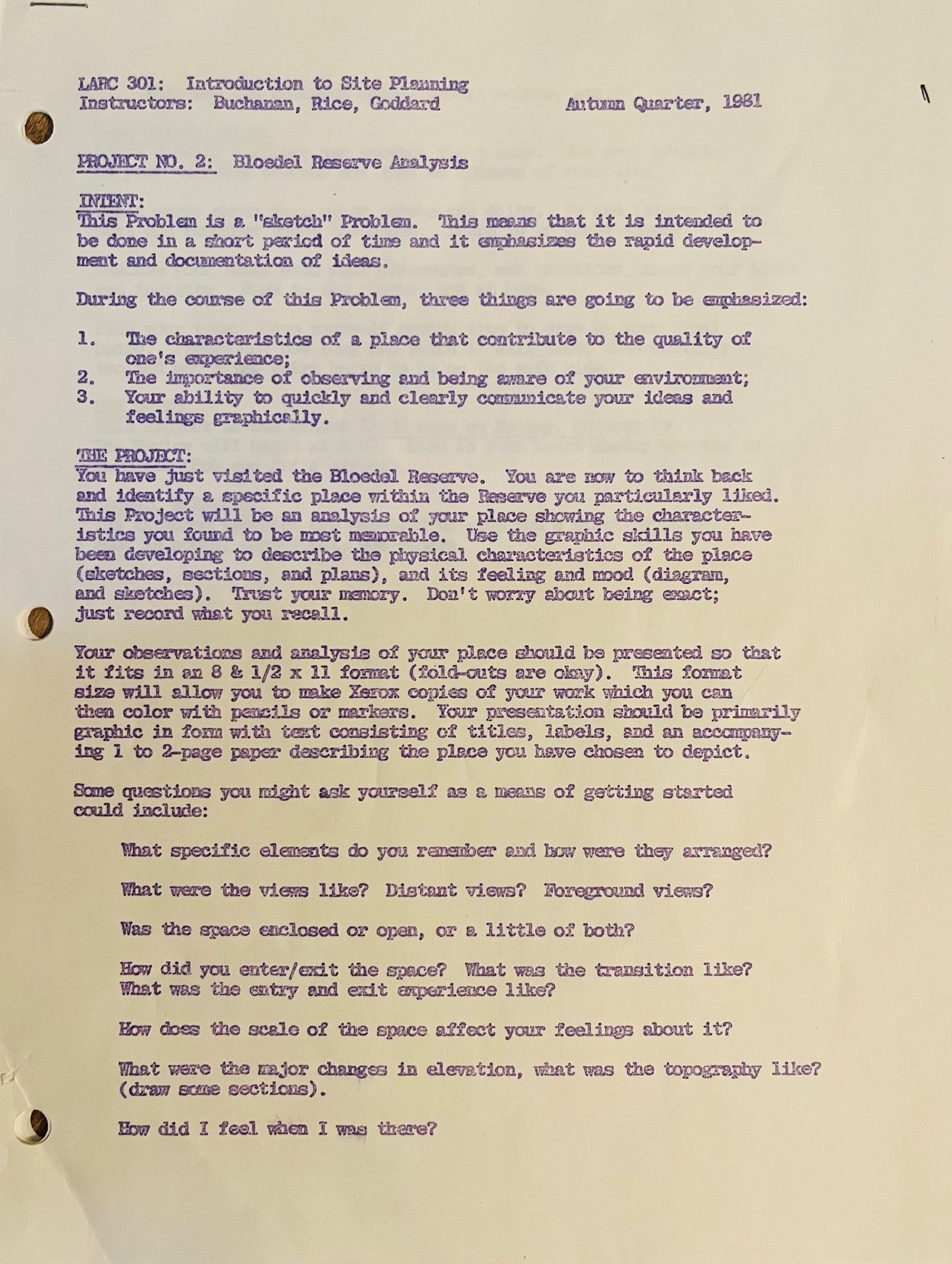
Introduction to Site Planning assignment
Also inside the box of assignments was a letter from Mr. Bloedel to Professor Buchanan that he penned after receiving copies of the completed projects. In it, Mr. Bloedel notes that he found “a number of instances where they were moved by views or insights which had before this escaped my notice.” In particular, one student’s perspective stood out to Mr. Bloedel. He writes:
“You will perhaps be surprised that I had never noticed that the residence and practically the full length of the middle pond are visible from the little bridge at the outlet to the Japanese pond––in fact, I didn’t believe it till I went to the spot and checked.”
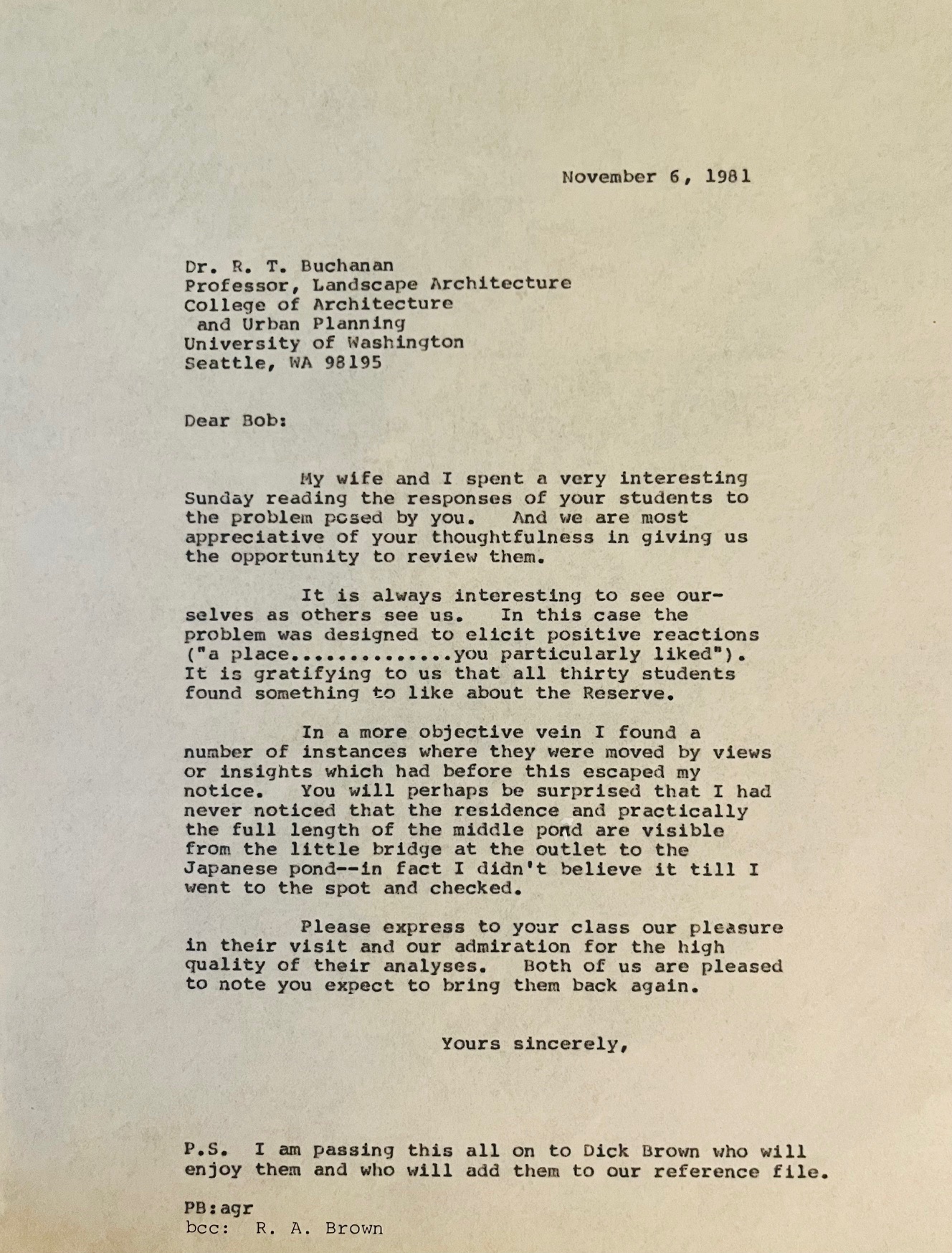
Letter from Prentice Bloedel
Mr. Bloedel’s response illustrates that his welcome of students to the Reserve cultivated a connection. In hosting Prof. Buchanan’s students for an afternoon, he invited fresh perspectives from a new generation of landscape architects and learned to view his own home in new ways.
For the student visitors, the landscape architecture of Bloedel Reserve also had a lasting impact on their perspectives. A young Kenneth Philp was one of Professor Buchanan’s students who visited the Reserve, and he works as a landscape architect in Washington to this day. Philp recalls that the Reflection Pool “left the strongest impression” on him and that in his professional career, he designed a reflecting pool elsewhere on Bainbridge Island based on these impressions.
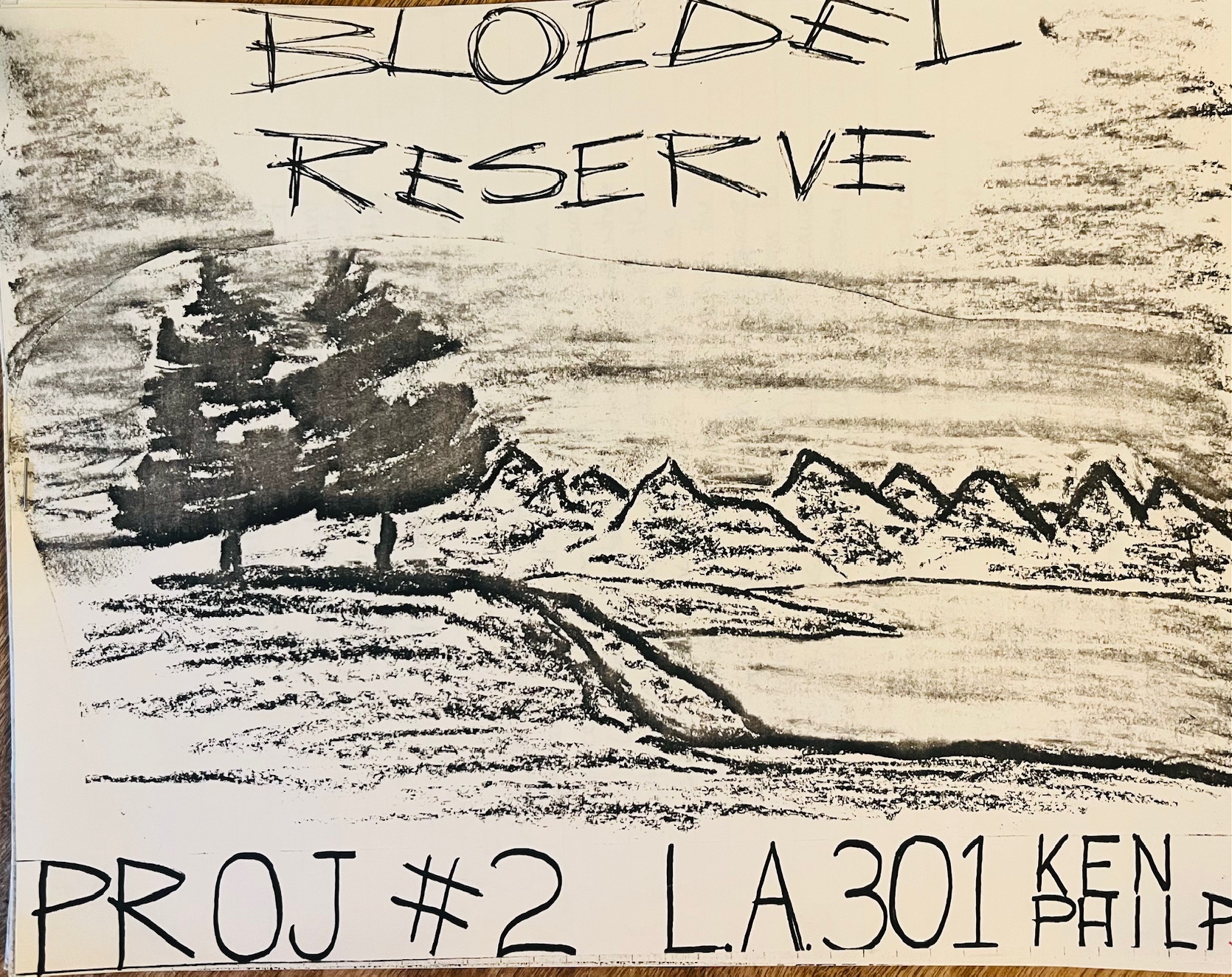
Mr. Phip’s project cover
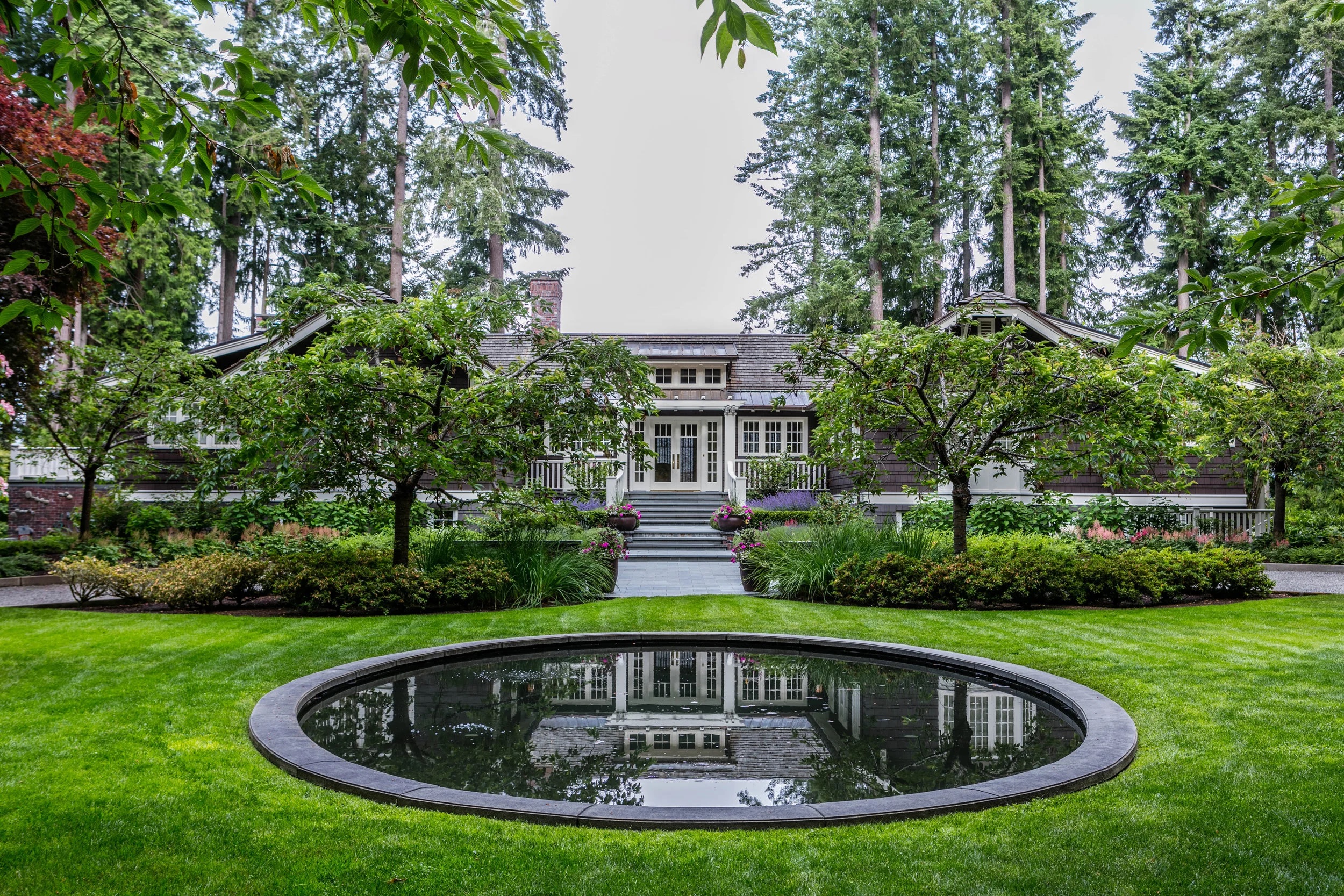
Contemporary reflection pond designed by Mr. Philp on Bainbridge Island
Mr. Bloedel was committed to curating an experience at the Reserve that harmonized intentional design and nature. In welcoming young aspiring architects to share that experience, he inspired new generations of creative minds that continue to carefully shape the world around us.
–Written by Kyle Mahoney
Kyle Mahoney is a University of Washington Library and Information Science graduate student conducting directed field work at Bloedel Reserve.