
Why We Burn the Meadow
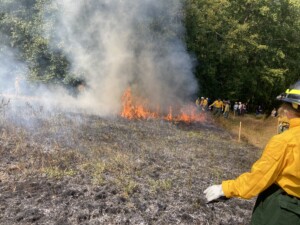 Visitors may notice that part of the landscape in the Buxton Pollinator Meadow looks a little different this month. On August 17, the Bainbridge Island Fire Department, working in partnership with Bloedel Reserve, neighboring fire agencies, and Bainbridge Prepares, conducted a prescribed burn across just under one acre of the meadow.
For many of us, fire is something we instinctively associate with destruction. But fire can also be a tool for renewal, and it is one that has shaped Northwest landscapes for thousands of years.
Fire as a Management Tool
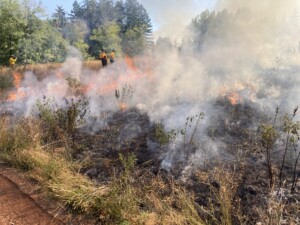 Meadows are not static landscapes. Left to their own devices, shrubs and eventually trees can begin to establish, gradually changing an open meadow into something else entirely. Maintaining a meadow therefore requires active stewardship, as Natural Land and Conservation Manager Haley Wiggins well-knows!
At Bloedel, we use a variety of techniques to manage these landscapes, including selective hand-removal of invasive plants; occultation, or the suppression of unwanted vegetation using black plastic; seeding and direct planting; and prescribed burns. Each affects the meadow differently.
A carefully managed burn suppresses woody vegetation and some undesirable plants, recycles nutrients, and creates space and light for new growth. Fire also reduces the amount of dry plant material present on the landscape, helping to reduce wildfire risk.
Our goal at Bloedel is to integrate these different tools to support a diverse, habitat-rich meadow over time.
How a Prescribed Burn Works
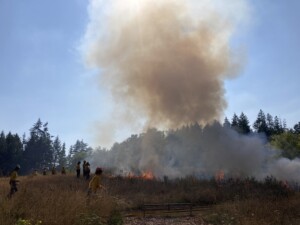 A prescribed fire is very different from an uncontrolled wildfire. The word prescribed is important: each burn operates under a legally authorized written plan that establishes specific requirements for weather, fuel conditions, staffing, safety, and environmental conditions. If those conditions aren’t met, the burn doesn’t happen.
That also explains why prescribed burns can take place during a seasonal burn ban; the dry conditions of late summer are precisely what makes a prescribed burn possible. Outside of the typical burn-ban season, vegetation in our maritime climate is often simply too wet to burn.
Recognizing the ecological benefit and the distinction between recreational or general outdoor burning and a carefully planned prescribed fire, the City of Bainbridge Island amended its burn ordinance to allow permitted prescribed burns to occur during a burn ban when required conditions and approvals are met.
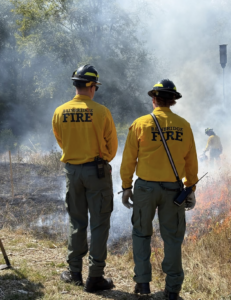 This year’s burn was led by the Bainbridge Island Fire Department, with participation from North Kitsap Fire & Rescue, South Kitsap Fire and Rescue, Pierce County Fire District 13, the Washington State Department of Natural Resources, Bainbridge Prepares, and Bloedel Reserve staff. Bainbridge Prepares’ TechOps Drone Team also monitored the burn from above using a thermal-imaging drone, providing an aerial view of the operation and helping confirm afterward that the fire was fully extinguished.
For our fire-service partners, the meadow provides a valuable opportunity to practice wildland firefighting techniques under controlled conditions. Those skills are increasingly important for protecting communities throughout the Pacific Northwest. For Bloedel, the partnership gives us access to fire expertise and the burn itself allows us to experiment with using fire as a tool for stewarding the Pollinator Meadow.
What Happens Next
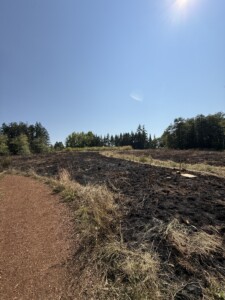 This is the third consecutive year that prescribed fire has been used in portions of the Pollinator Meadow, giving the horticulture team an opportunity to observe how the landscape responds over time. We watch which plants return, which species increase or decline, how invasive plants respond, and how the overall character of the meadow changes.
In the weeks immediately following the burn, the landscape can appear stark. But much of a meadow’s life remains protected below ground. As rain returns, new growth will gradually emerge from beneath the blackened surface. That cycle of disturbance and renewal is part of what makes a meadow a meadow.
Gardens are often associated with planting, pruning, and careful cultivation. But stewardship can take many forms. Sometimes caring for a landscape means allowing disturbance, and even something as seemingly destructive as fire, to play a role.
–Written by Kaslin Daniels, Director of Horticulture & Design