

Occultation
Some of our most successful treatment trials to date involve occultation, the practice of securing black fabric or plastic tightly to the ground surface. Occulting works by starving vegetation of water, light, and oxygen, all the elements necessary for plant growth. In our first experiments, we compared the effects of occultation and solarization, a very similar practice that employs clear plastic as opposed to black. We found that in our meadow, solarizing did not cause as much mortality as occulting did, and promoted vigorous growth of broadleaf weeds, particularly sheep sorrel (Rumex acetosella).
We trialed occultation from summer through mid-fall in 2023, in the winter of 2023/2024, and from fall of 2024 through early spring 2025. The effects of occulting from June through September, the four warmest months of the year, were very comparable to occulting from October through March, the six coldest months. Since many of the problematic plant species that currently dominate the meadow do most of their active growth in spring and fall, denying them oxygen and light at those times of year seems to be just as damaging as “cooking” them under the tarp in the summer heat.
Following the removal of the black plastic and tarp, we used propane torches to burn off any remaining vegetation in preparation for spreading our custom-made seed mixes. Our seed mixes tend to perform well initially, but neither the four- or six-month occultation trials were sufficient to fully eradicate the existing pasture grasses, which eventually recovered and squeezed out most of the young pollinator plants that managed to germinate and grow in the short term.
Taking inspiration from a visit to Denver Botanic Gardens in 2025, we’re expanding the scope and time frame of occultation in the meadow this year. In late December 2025 our team of horticulturists installed several very large black tarps over an area totaling ⅓ of an acre in size. These “silage” tarps are reusable for years on end and will remain in place through March of 2027, over 14 months. The time frame will be more than double that of our previous occultation treatments, and the contiguous area under tarps is several orders of magnitude greater. We expect this extension of area and time to result in complete mortality of the existing pasture grasses and other weeds, giving our horticulturists the clean slate they need to establish a lasting, beautiful, and ecologically beneficial meadow community.
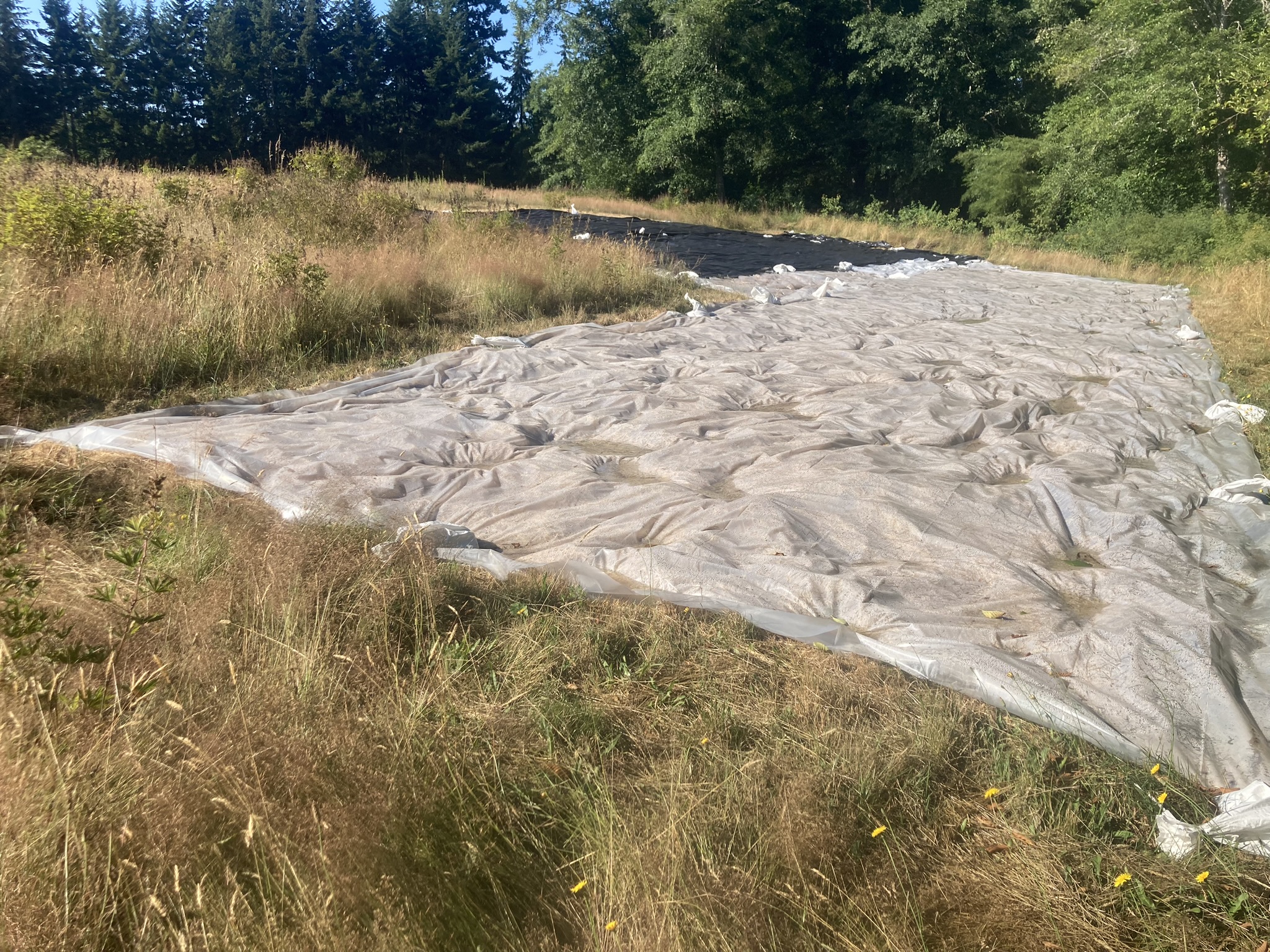
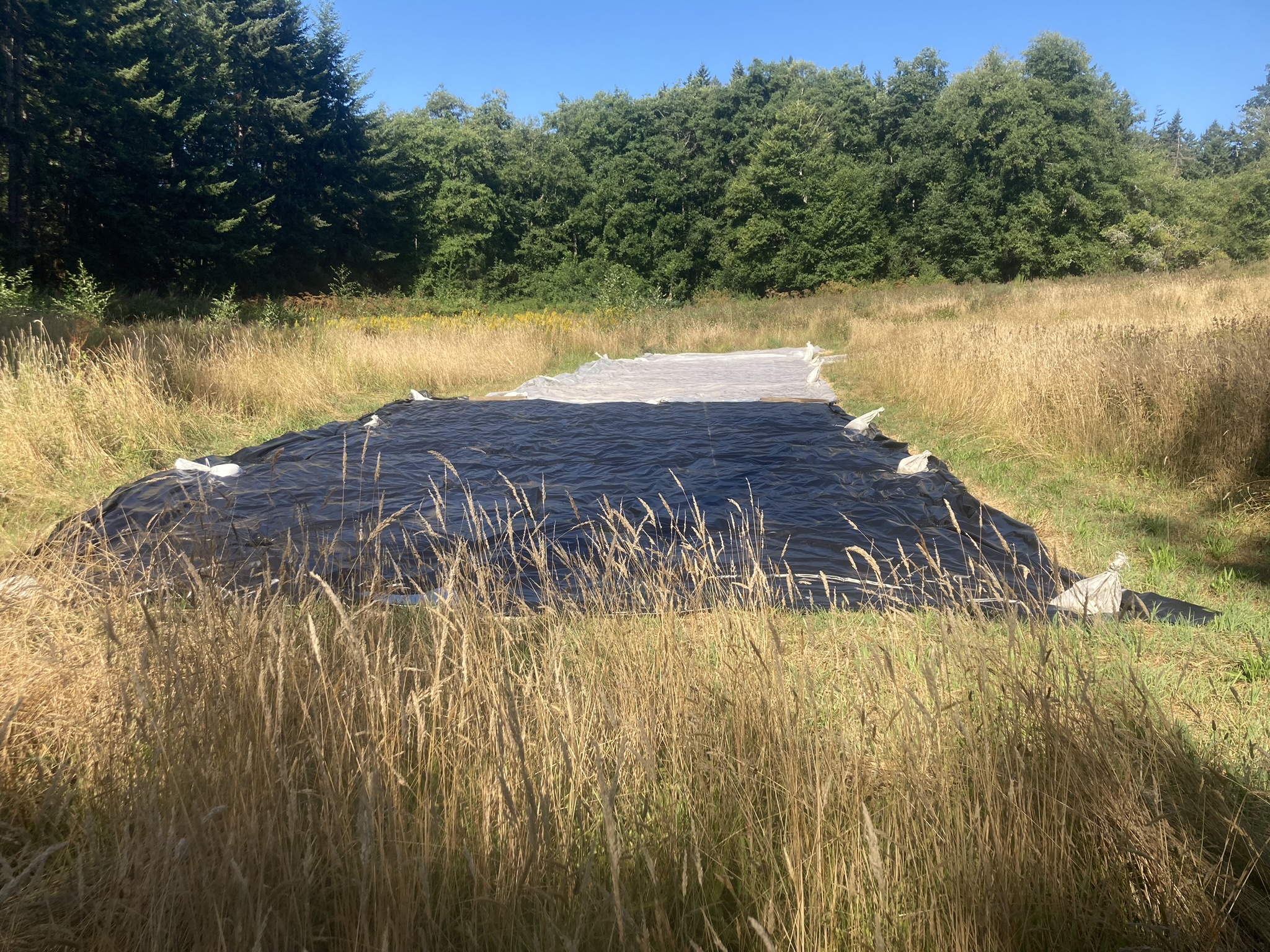
Experimenting with occultation vs. solarization in Summer 2023.
We favor occultation as a management approach because unlike some other methods, it's incredibly easy on the environment, with no negative effects on soils, hydrology, insects, or other kinds of wildlife. Expanses of plastic are admittedly unsightly; however, this action will allow us to create an exceptionally beautiful and ecologically beneficial section of meadow for all to enjoy in the near future!
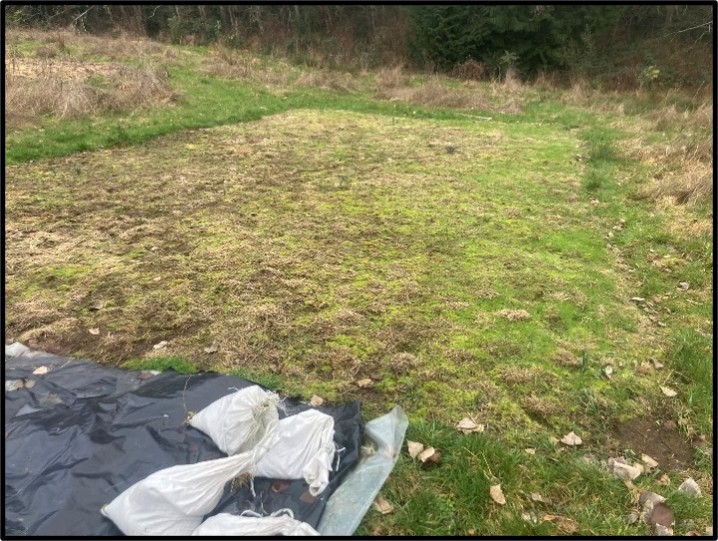
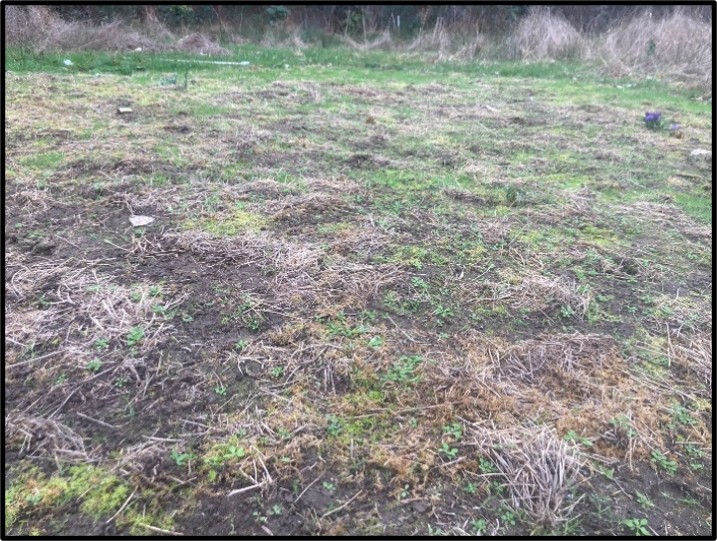
November 2023. Left: area that was under clear plastic from June through September 2023. Right: Area under black plastic for the same time period.
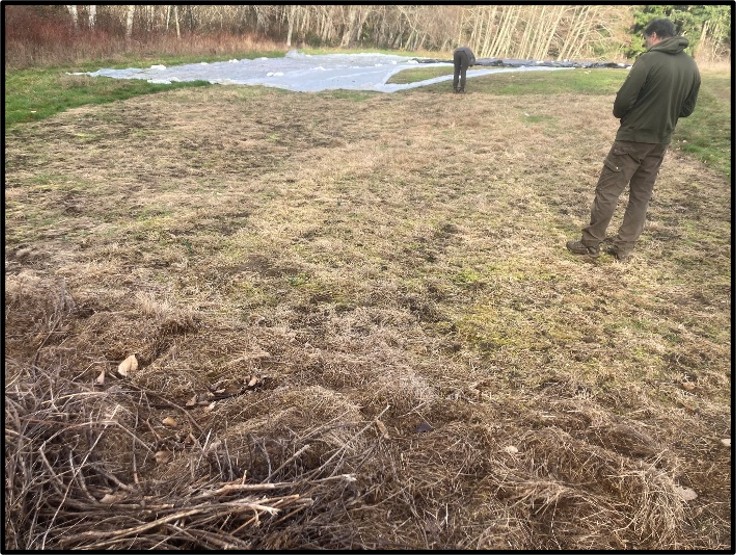
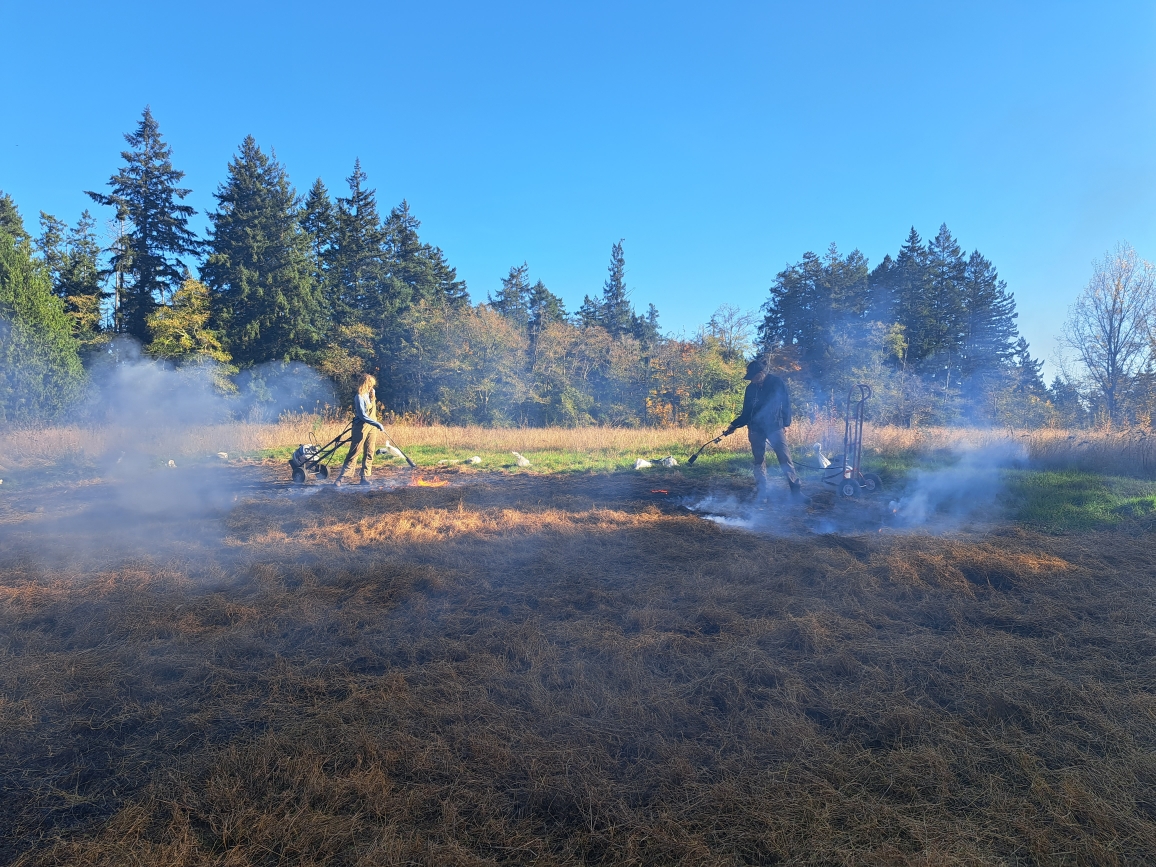
November 2023. Left: area under largest piece of black plastic, after removal. Right: burning off the dead thatch in the same area, to prepare for seeding.
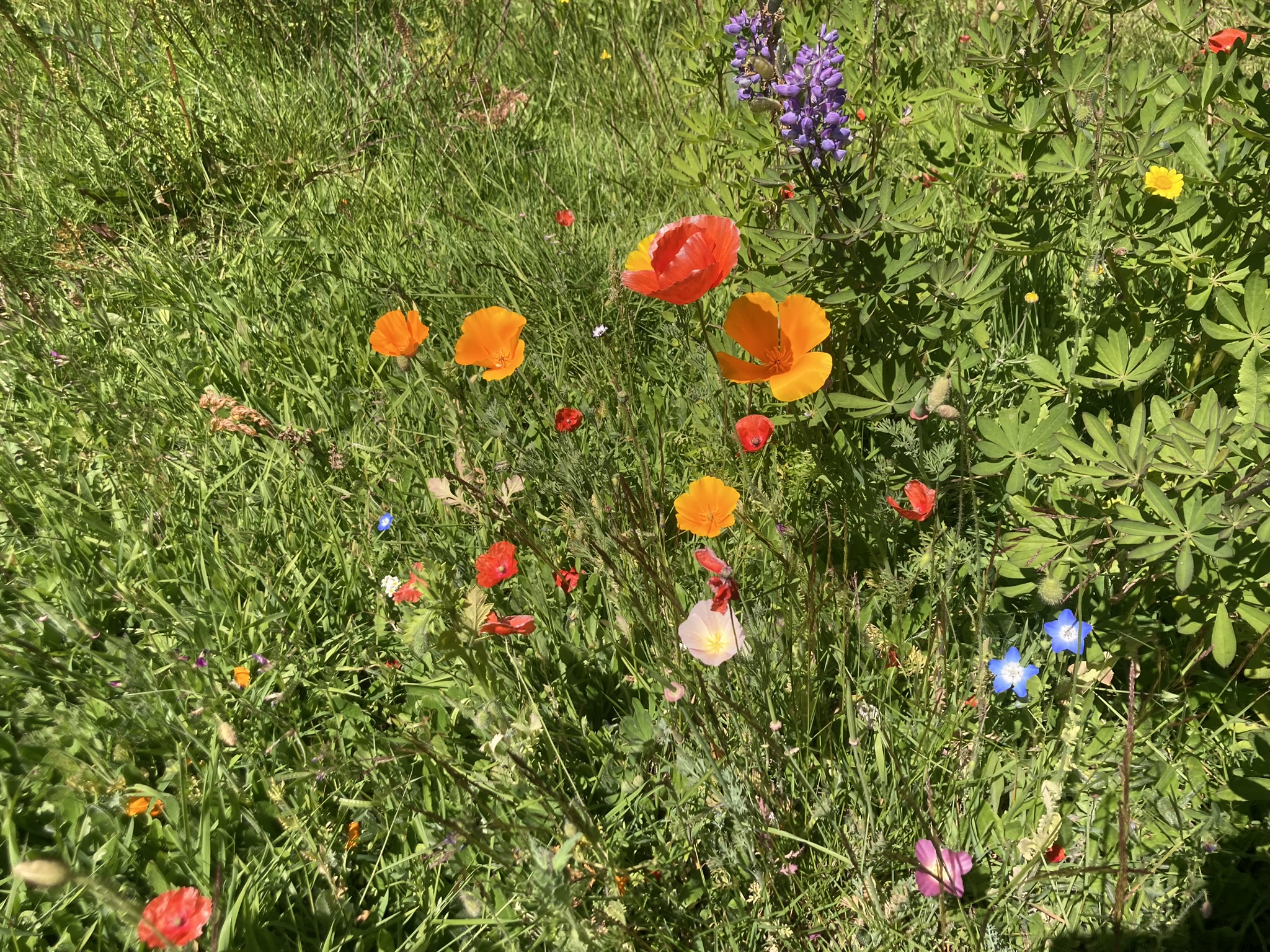
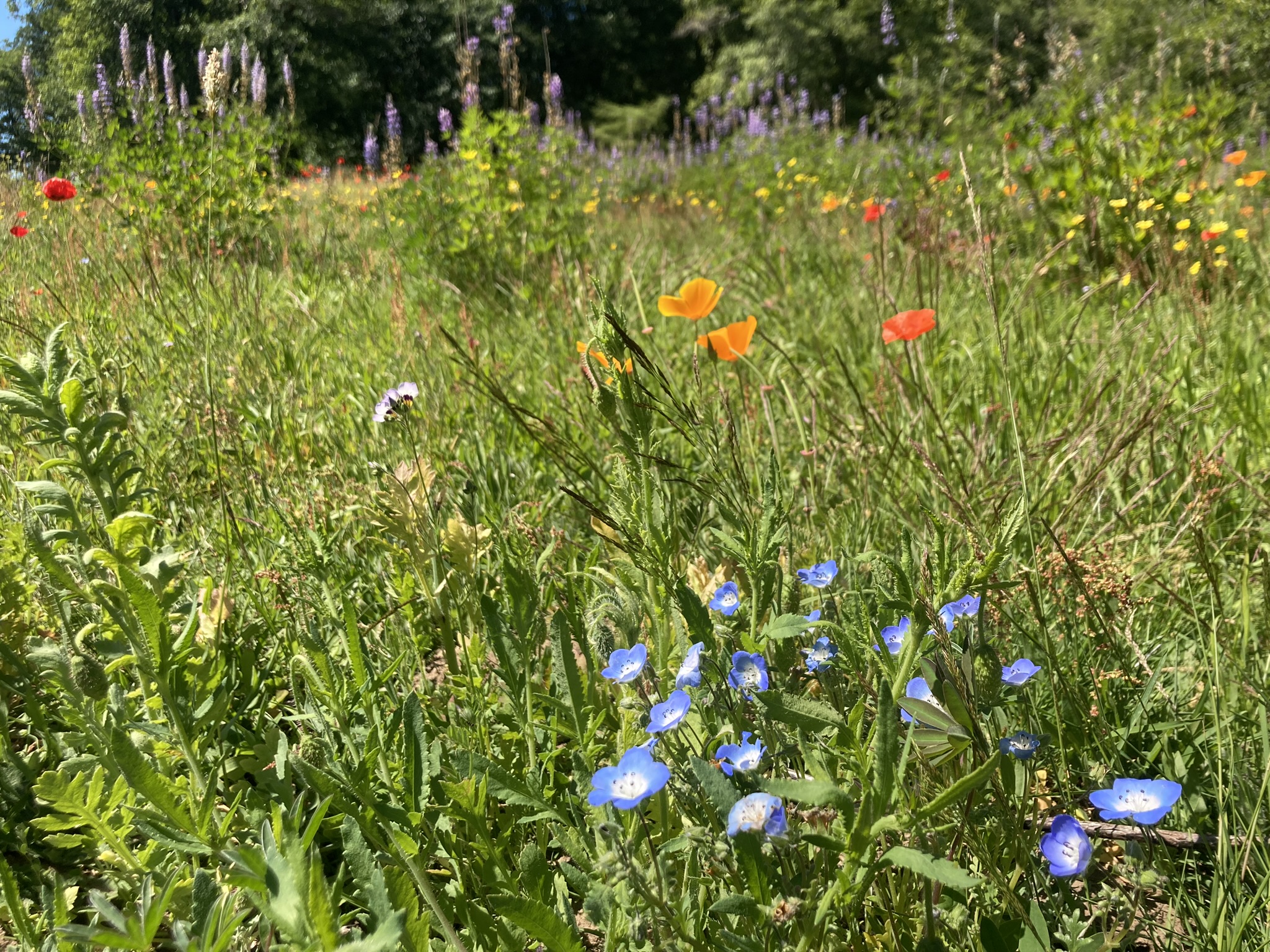
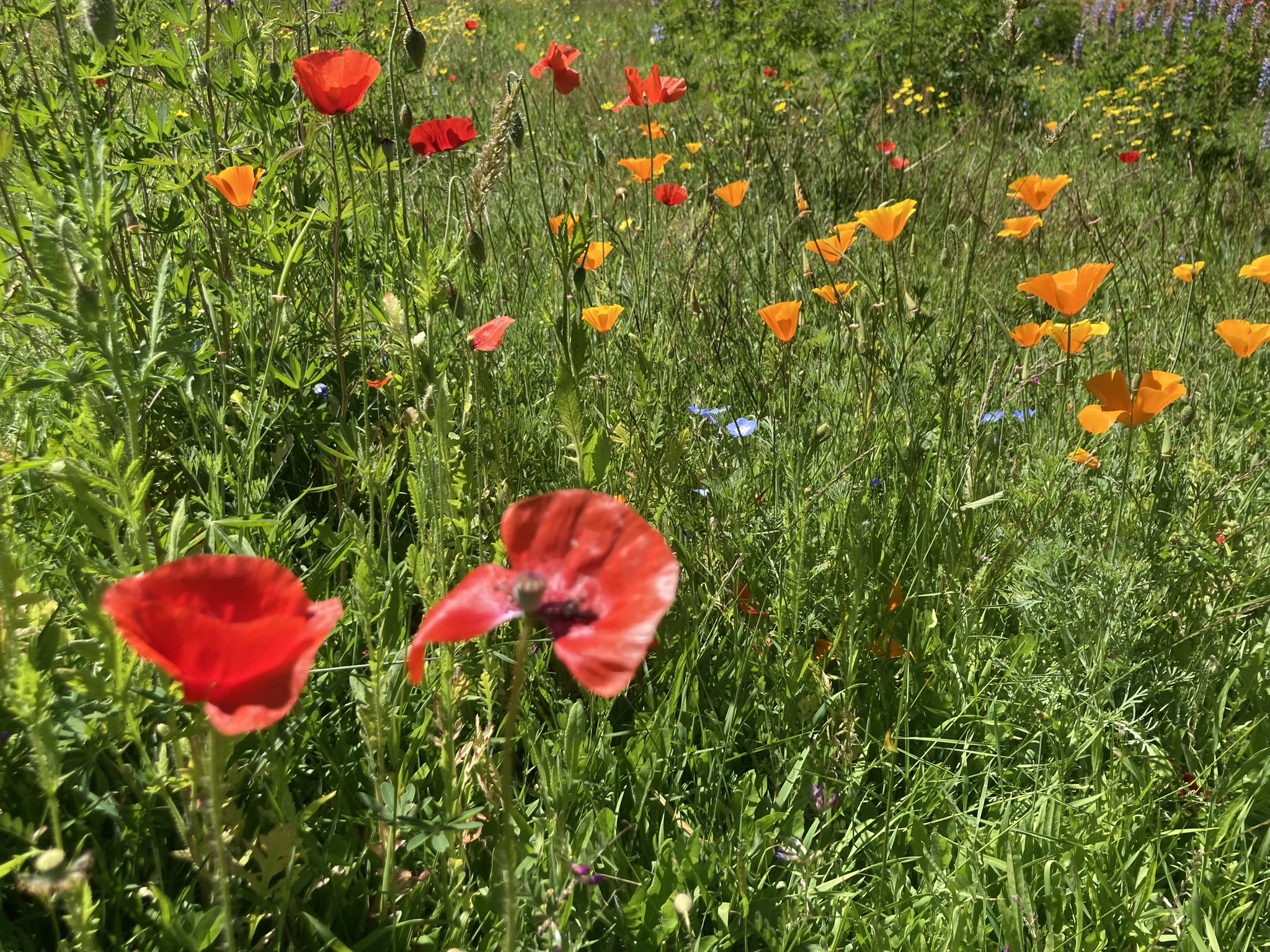
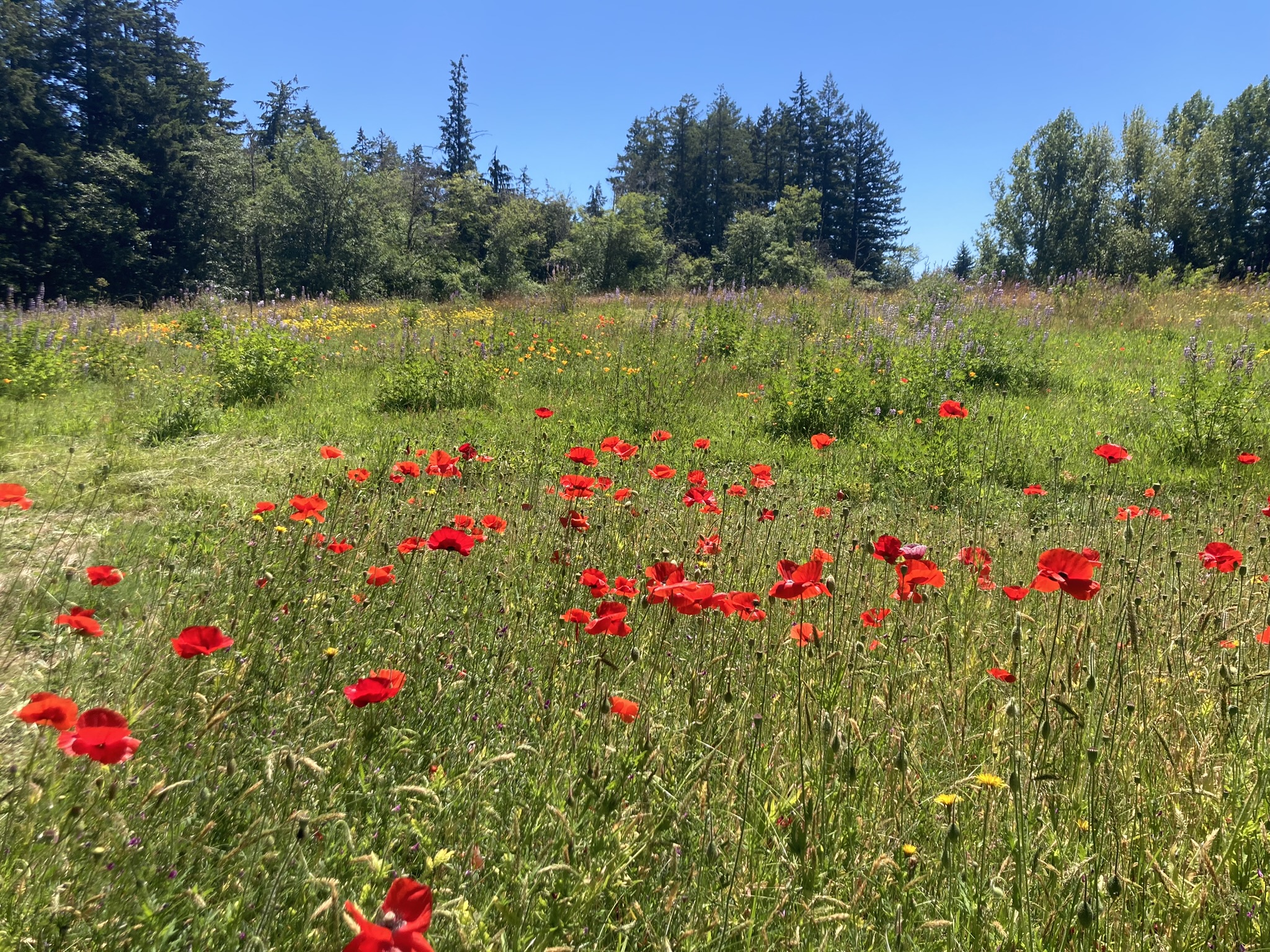
June 2024. The top and bottom left pictures were taken in an area that was occulted from October 2023 through March 2024, then seeded with a custom seed mix. The bottom right picture is of an area that was occulted in June through September of 2023, followed by burning and seeding.
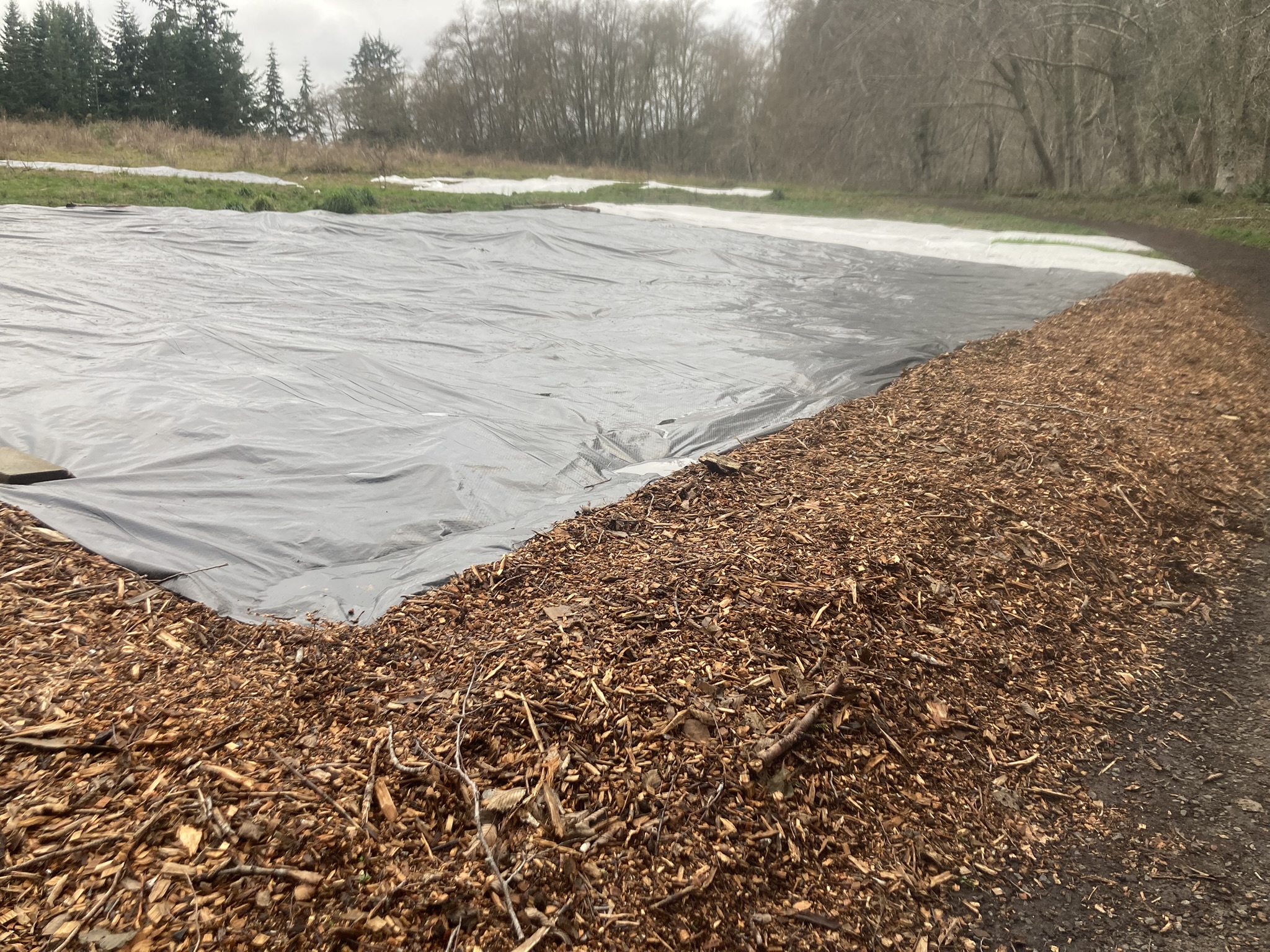
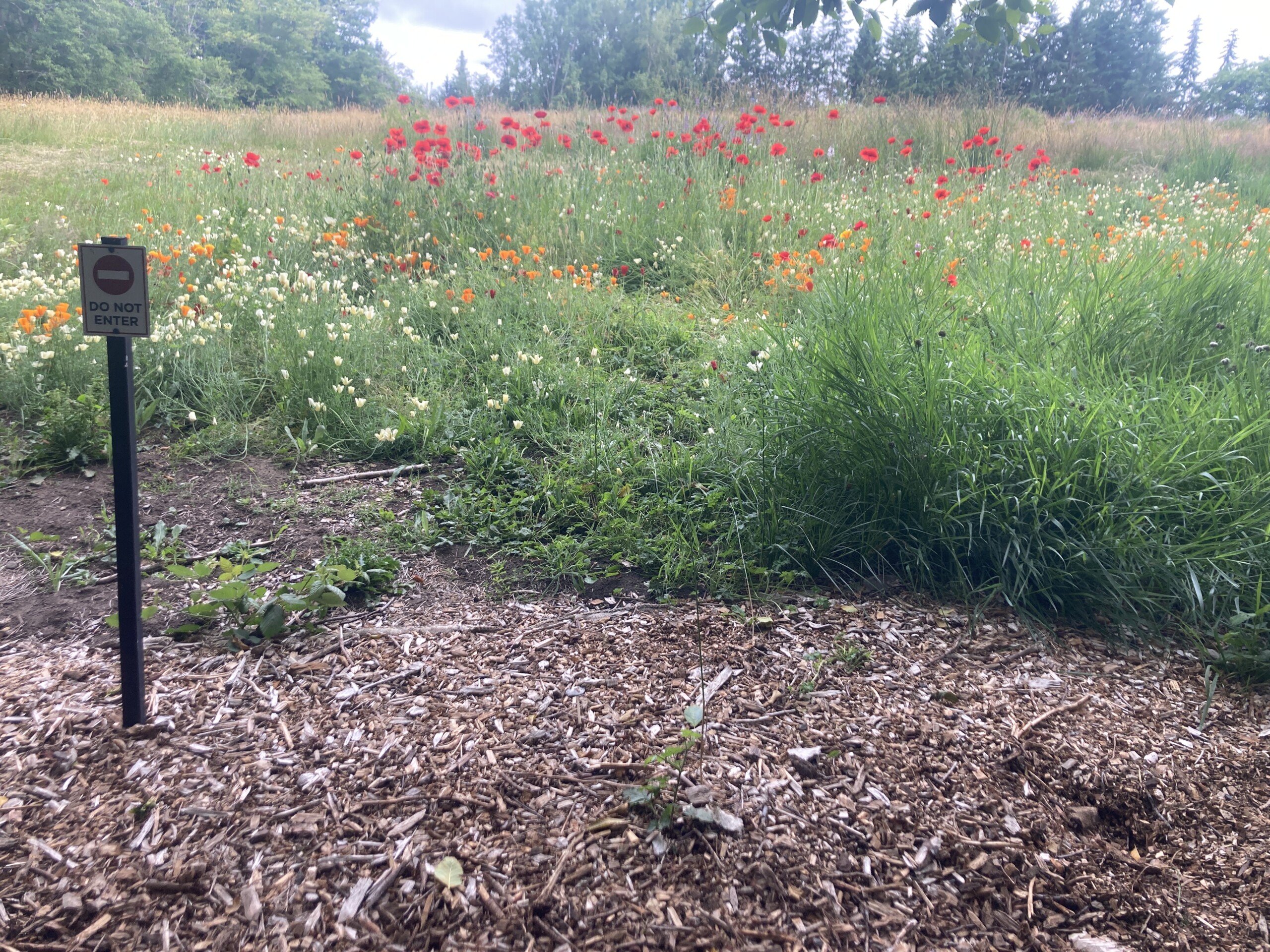
Left: Occultation adjacent to sheet-mulched area; picture taken in January 2025. Notice the sheet mulching still evident in front of the occulted and seeded meadow area.
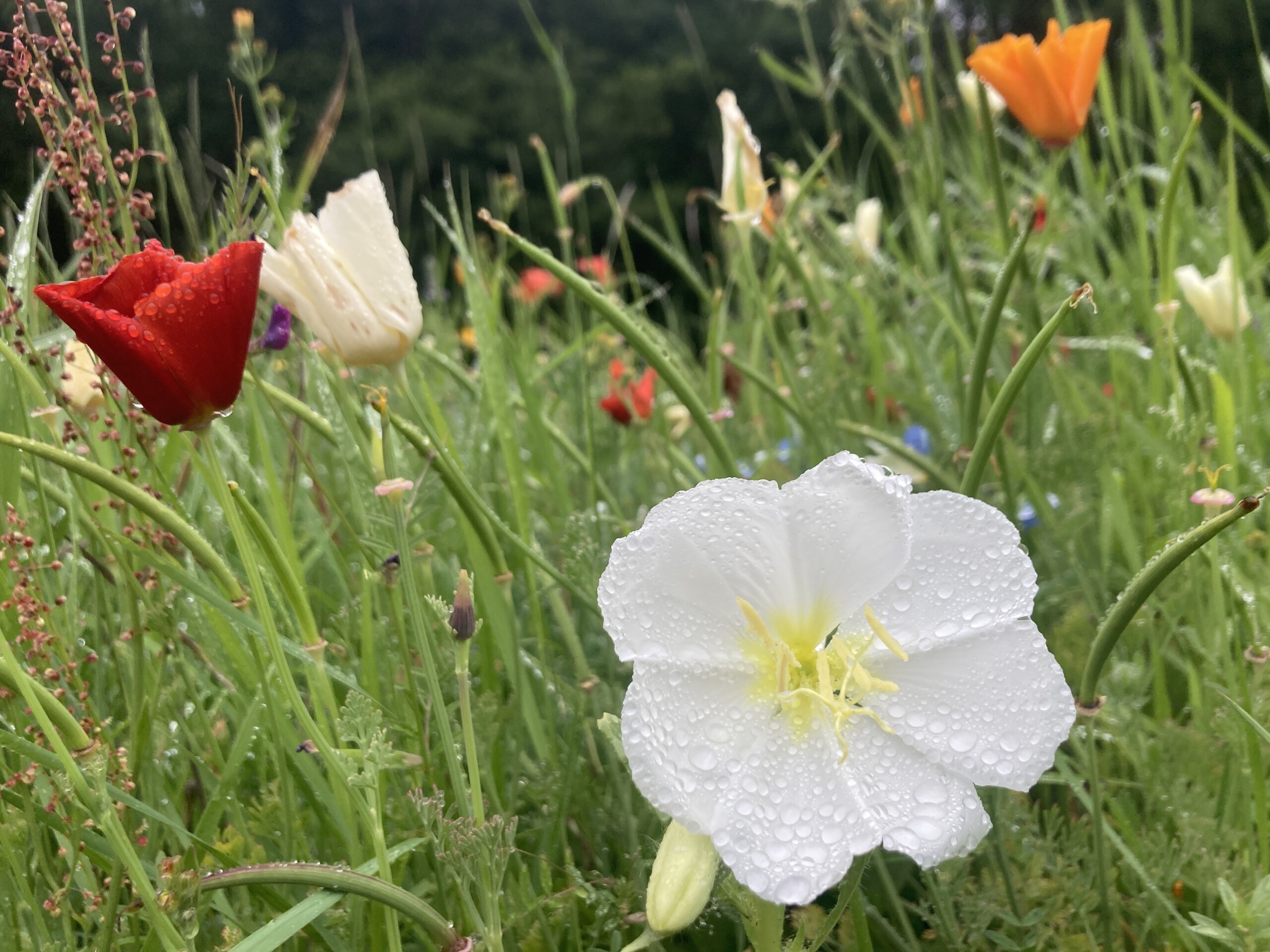
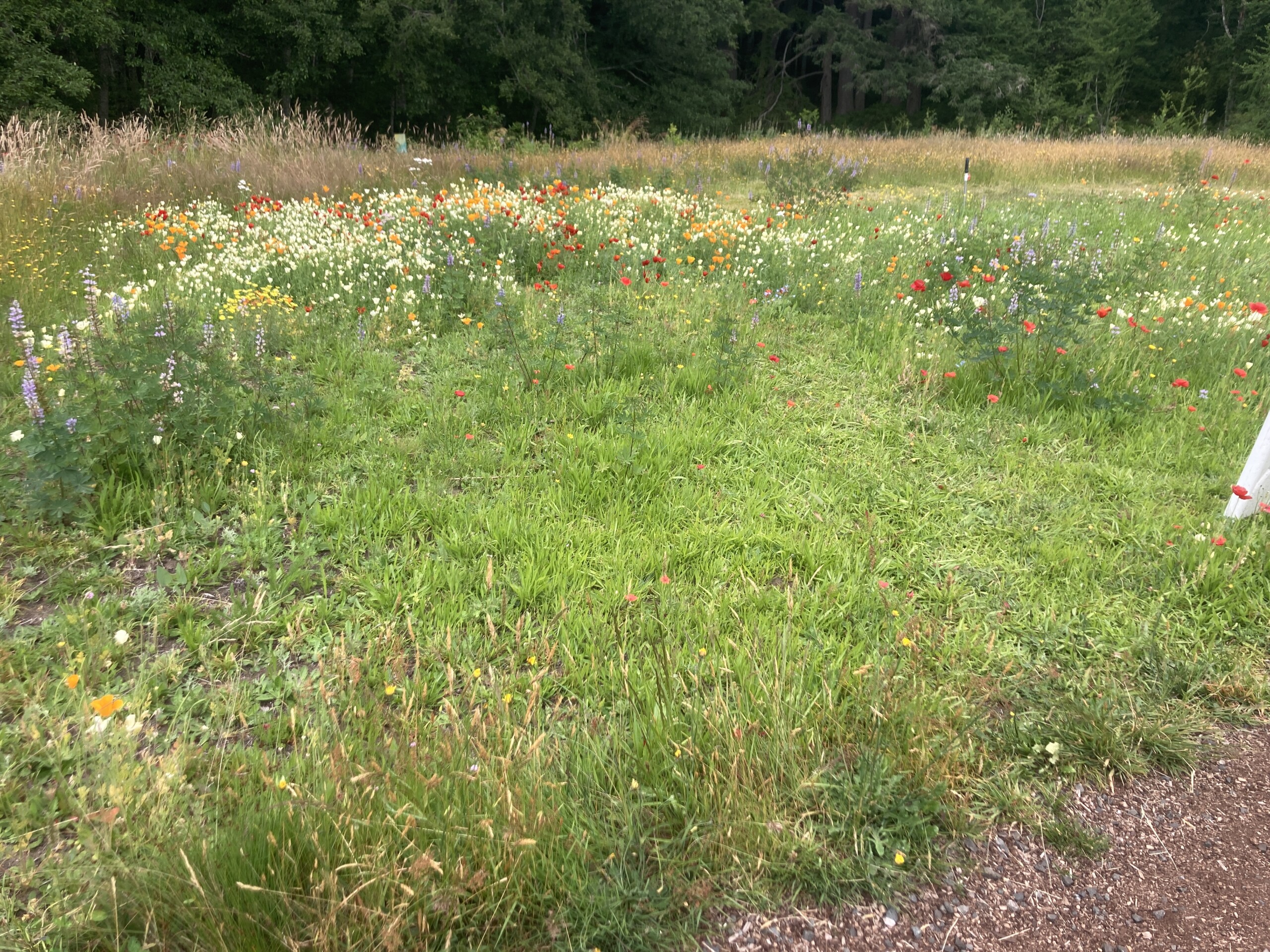
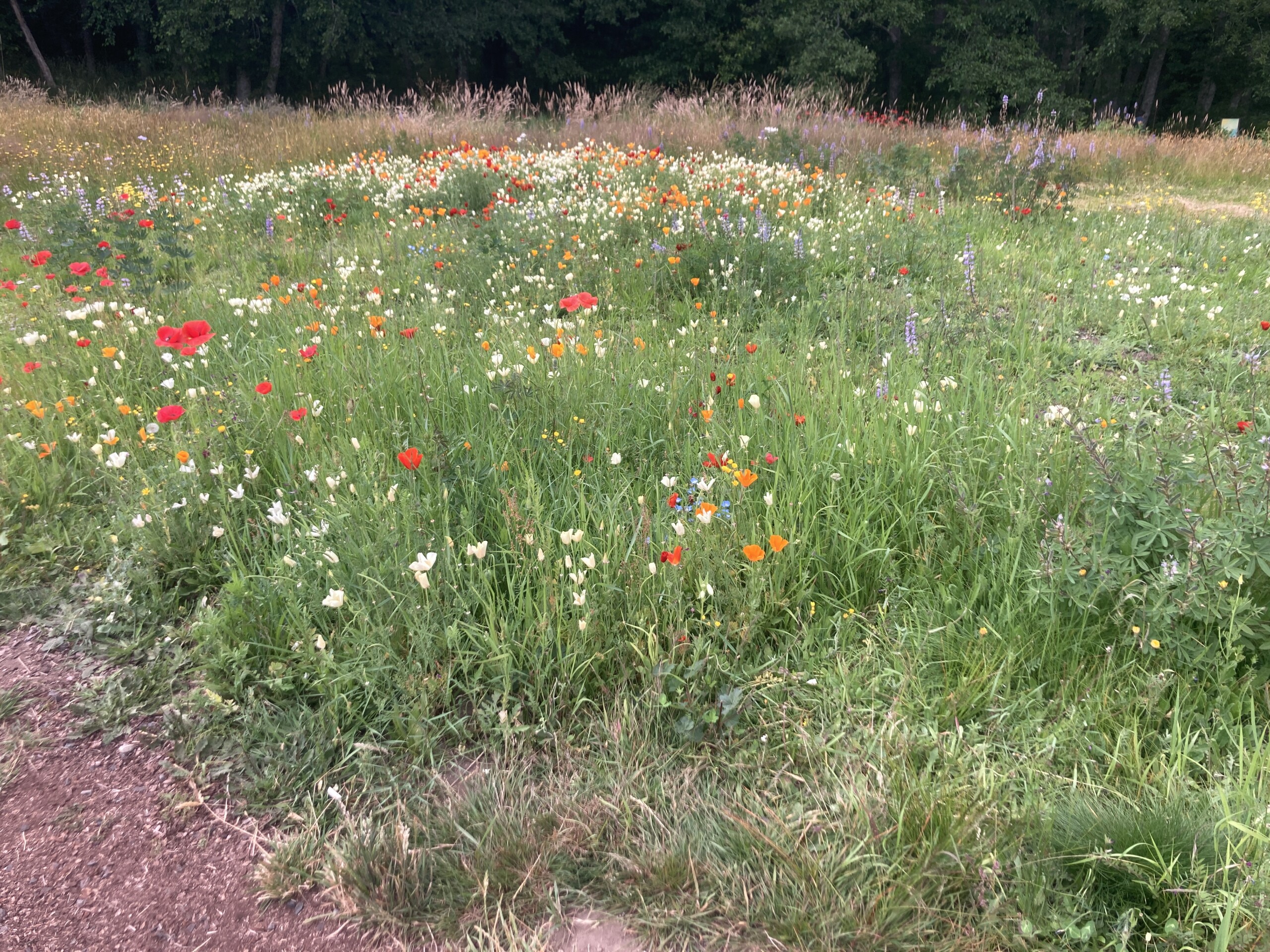
These were all taken in June 2025, in another area that had been covered in black tarp from October 2024 through March 2025. Many of the beautiful blooms seen here are annual wildflowers that are unlikely to return at the same density in 2026. Notice the large green area in the bottom left picture, where very few wildflowers established due to the high cover of cat’s ear and lanceleaf plantain, two of the most problematic broadleaved weed species in the existing meadow community.
SIGN UP FOR OUR ENEWSLETTER
Stay up to date on all of the events and activities taking place at Bloedel Reserve.