

Grazing Animals
Prior to the conversion process, the Frank Buxton Meadow was sheep pasture, or a collection of Eurasian perennial grass species, for more than 80 years. These species, which include creeping bentgrass (Agrostis stolonifera) and sweet vernal grass (Anthoxanthum odoratum), aggressively recolonized the site following the 2018 herbicide treatments that were meant to eradicate them. Today, lupin, woolly sunflower, yarrow, and checkermallows are not uncommon in the meadow, but their cover and that of other pollinator plants is low overall. The dense and extensive root systems of returned pasture grass plants dominate the meadow rhizosphere and act to prevent any further establishment of flowering herbs or native, desirable grasses. For the originally envisioned landscape of colorful, diverse wildflowers intermixed with native bunchgrasses to be realized, clearing the pasture grasses from the meadow is necessary.
Although grazing and browsing animals such as goats, sheep, pigs and chickens are primarily raised for agricultural purposes, they are also used for land clearing and management. To eliminate surface vegetation, goats are efficient browsers of woody plants like Himalayan blackberry, while sheep prefer to graze on grasses and other herbs. Pigs exhibit “rooting” behavior, pushing their snouts underground to prey on any plant material they find there. Rooting effectively kills the roots of perennial herbs, grasses, shrubs and trees. Chickens also attack the roots of plants in their efforts to find soil-born insects and seeds. On confined sites, their persistent “scratching” and foraging activities can eradicate herbaceous vegetation and significantly reduce the quantity of undesirable seeds stored in the soil.
In addition to being highly effective, using animals to remove undesirable vegetation is among the most ecologically friendly methods available for the targeted removal of vegetation from a site. The practice is vastly more appealing to land managers with an environmental conscience than chemical applications are, which did not successfully eradicate the problem grasses here in the first place. In addition to other methods with few adverse impacts relative to herbicides, we wanted to assess whether the use of grazing animals for pasture grass eradication is a viable management approach for the pollinator meadow.
Because of the novelty of the idea and the need to minimize the amount of staff time required for this effort, we started very small with a trial using chickens only. With twenty hens (roosters are more difficult to manage and were avoided), we set out to clear 800 square feet of meadow in the 2024 season. The grazing season would last seven months, beginning in late April and ending in early November. For context, the area of the entire meadow is roughly 130,000 sq ft, so this was truly a small-scale experiment.
We’re very fortunate to have a deeply knowledgeable and experienced horticulturist on staff, Nursery Manager Sonja Parker, who has worked with grazing animals extensively in this exact context. During our 2024 trial, her expertise was applied at every step of the process. We took measures to ensure the safety of animals, staff, and guests, to minimize costs and labor, and to select an appropriate breed.
The breed of the chickens we chose was the ‘Speckled Sussex’, an attractive bird valued for their mild and friendly temperament, voracious foraging and scratching tendencies, and camouflaging colors. They are also cold hardy and have limited disease and pest susceptibility beyond the normal lice and mites. Speckled Sussex birds take a little longer than 20 weeks to mature and produce an average of four to five large brown eggs a week once they do. We ordered them from McMurray’s, a reputable breeder based in Iowa, and a box of 20 hatching chicks were shipped to us in mid-March, 2024.
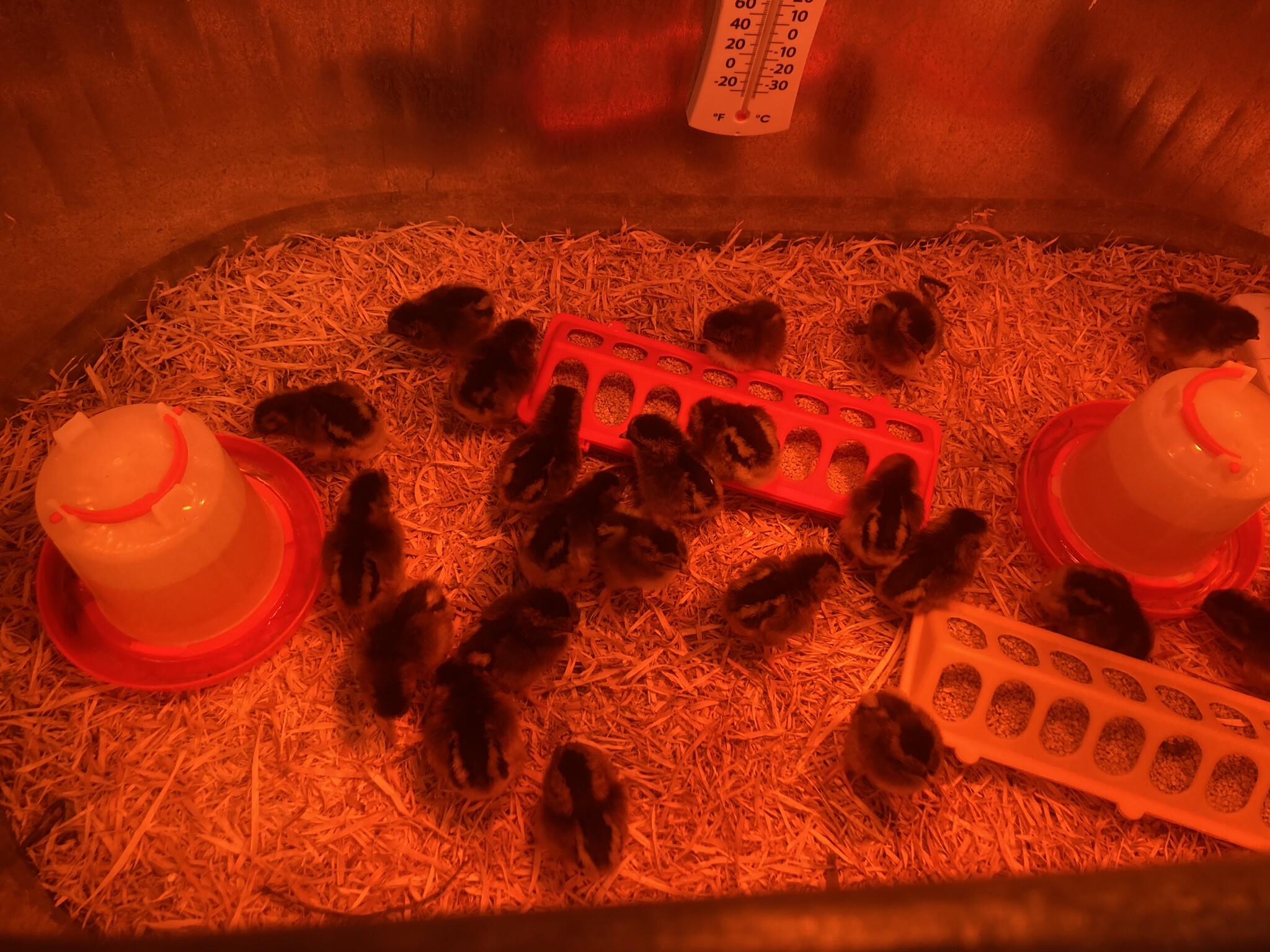
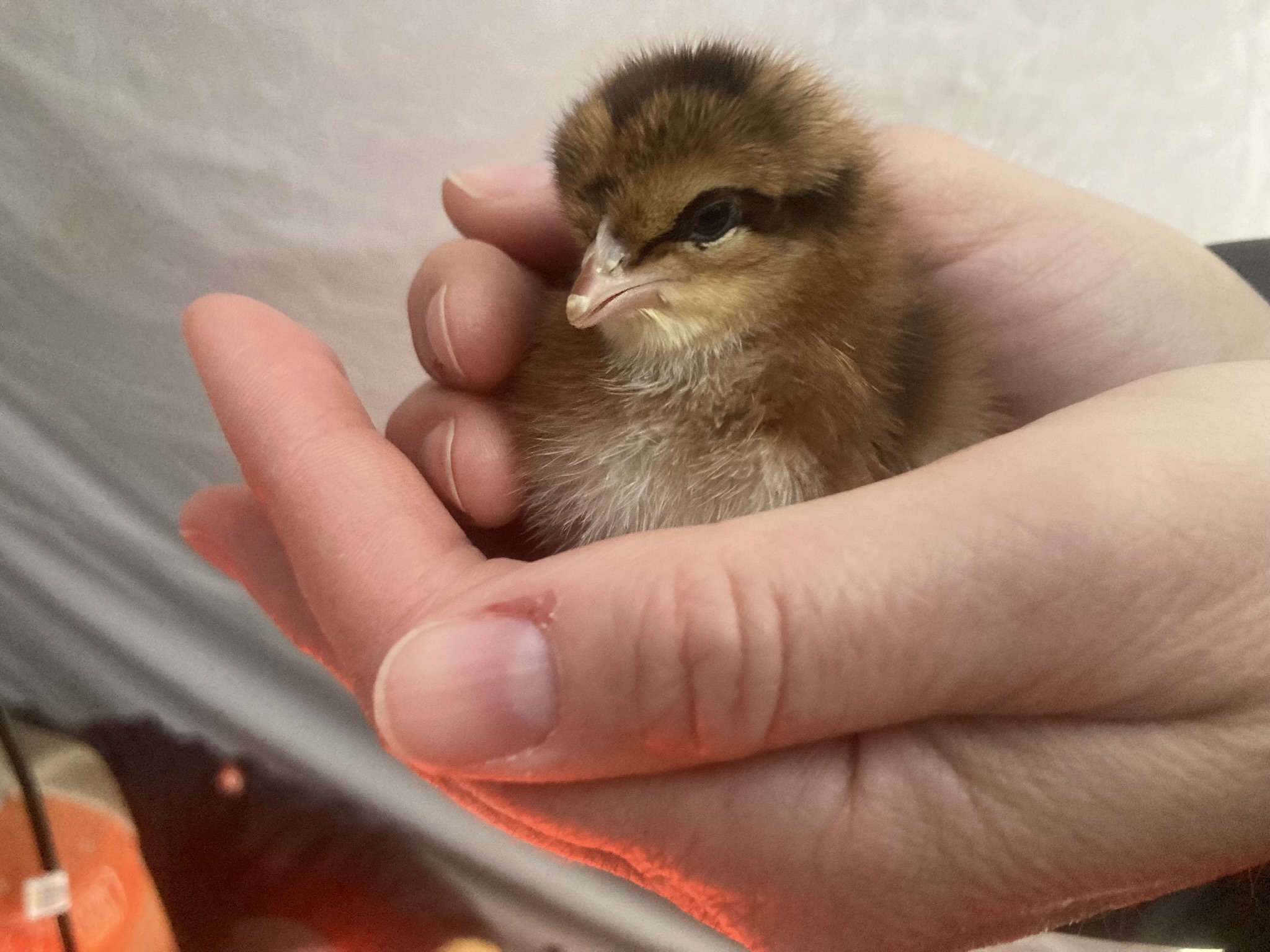
Speckled Sussex hatchlings, April 2024
We raised the chicks in metal troughs outfitted with feeding trays, gravity-fed poultry waterers, bedding of wood shavings, and overhead heat lamps in one of our barns for roughly two months, enough time for their true feathers to emerge and to reach a large enough size for relocation to a portable coop (“chicken tractor”) in the meadow.
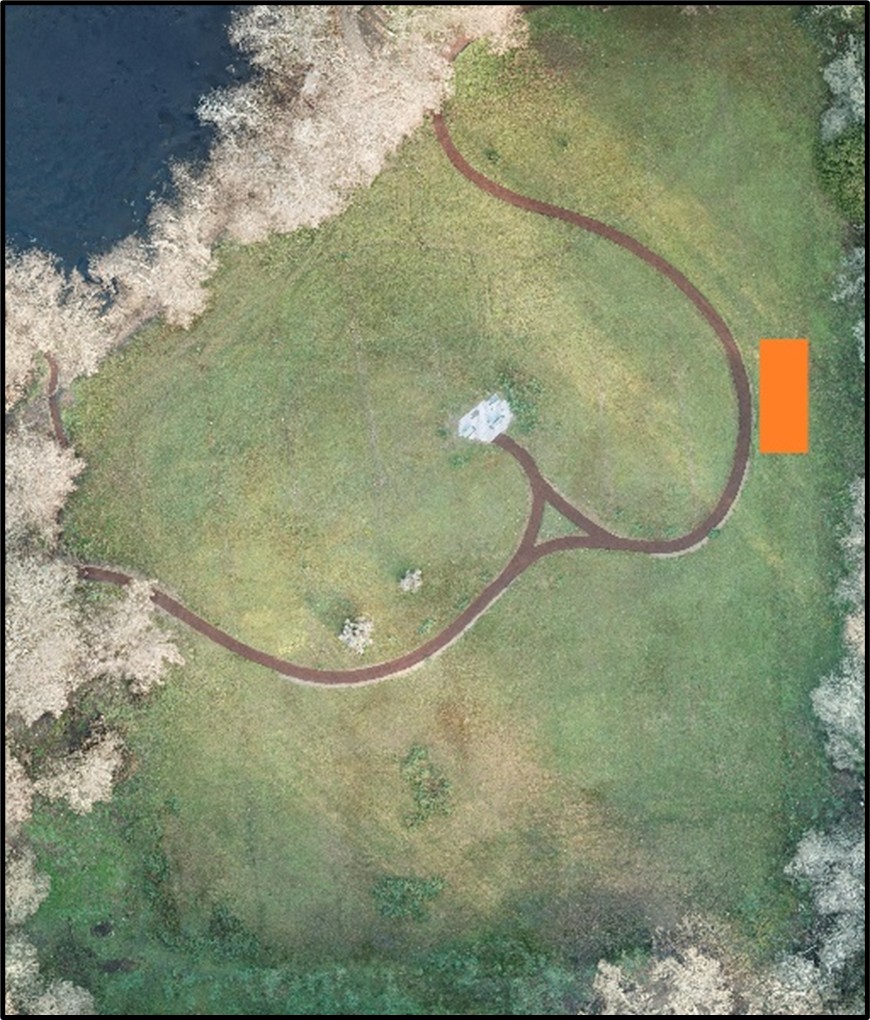
The orange rectangle represents the 800 sq ft area for the 2024 chicken grazing trial (not to scale).
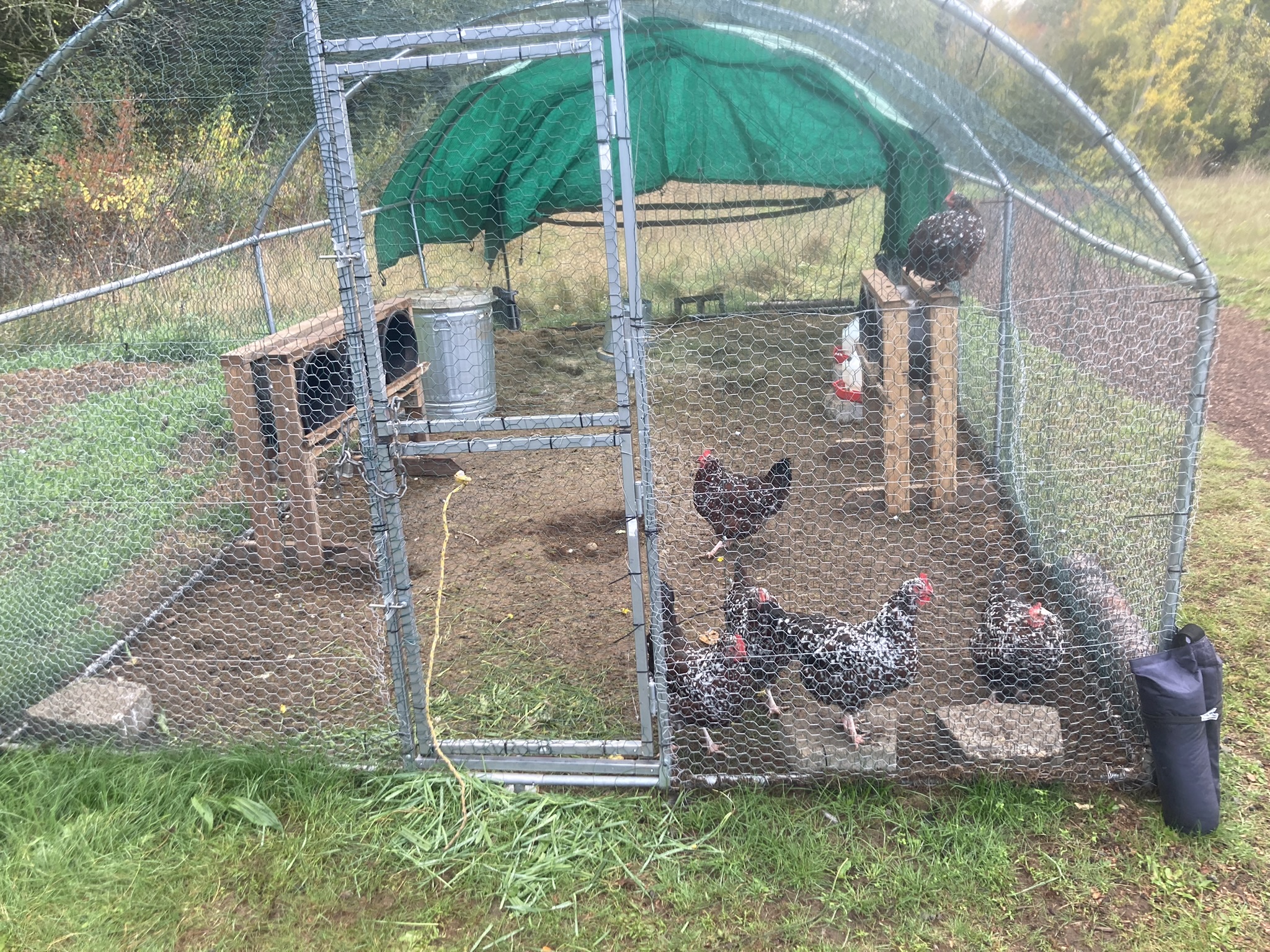
Our chicken tractor was 20 ft long and 10 ft wide and was selected because 200 square feet is an appropriate size for 20 hens. We outfitted the enclosure with enhanced protections from predators; our main concerns in the pollinator meadow were raptors, coyotes, and raccoons. The top was securely covered with chicken wire to protect from raptors, and we attached additional layers of chicken wire around the bottom three feet of the coop so that raccoons wouldn’t be able to reach in and grab the hens. While we did use cinder blocks to fill a few small gaps between the bottom of the structure and the ground, we never observed any signs of digging or other attempts to enter from underneath. Branches hung using carabiners and rope established roosting perches in the center of the structure, providing the hens with a safe place to sleep in the interior and away from the edges, where they were most vulnerable to raccoon predation. We also used squat nursery containers for nesting boxes, and zip-tied a tarp awning over half the structure’s roof to provide protection from heat and rain.
By shifting the 200 sq ft chicken tractor cyclically among four areas, we set the chickens up to thoroughly graze on and clear an 800 sq ft area. Once the coop was moved from a 200 sq ft area, the vegetation would start to recover, so that when it was time for the chickens to cycle back there were more roots and seeds to attack. The whole cycle repeated four times over the course of the season. Our trial area abutted the meadow trail and was selected because the vegetation is already relatively short and weakened due to previous solarization in 2023, and because we wanted our guests to have the opportunity to interact with the hens. This access led to considerable foot traffic through the treatment area, further reducing vegetation cover but also compacting the soil more than we anticipated.
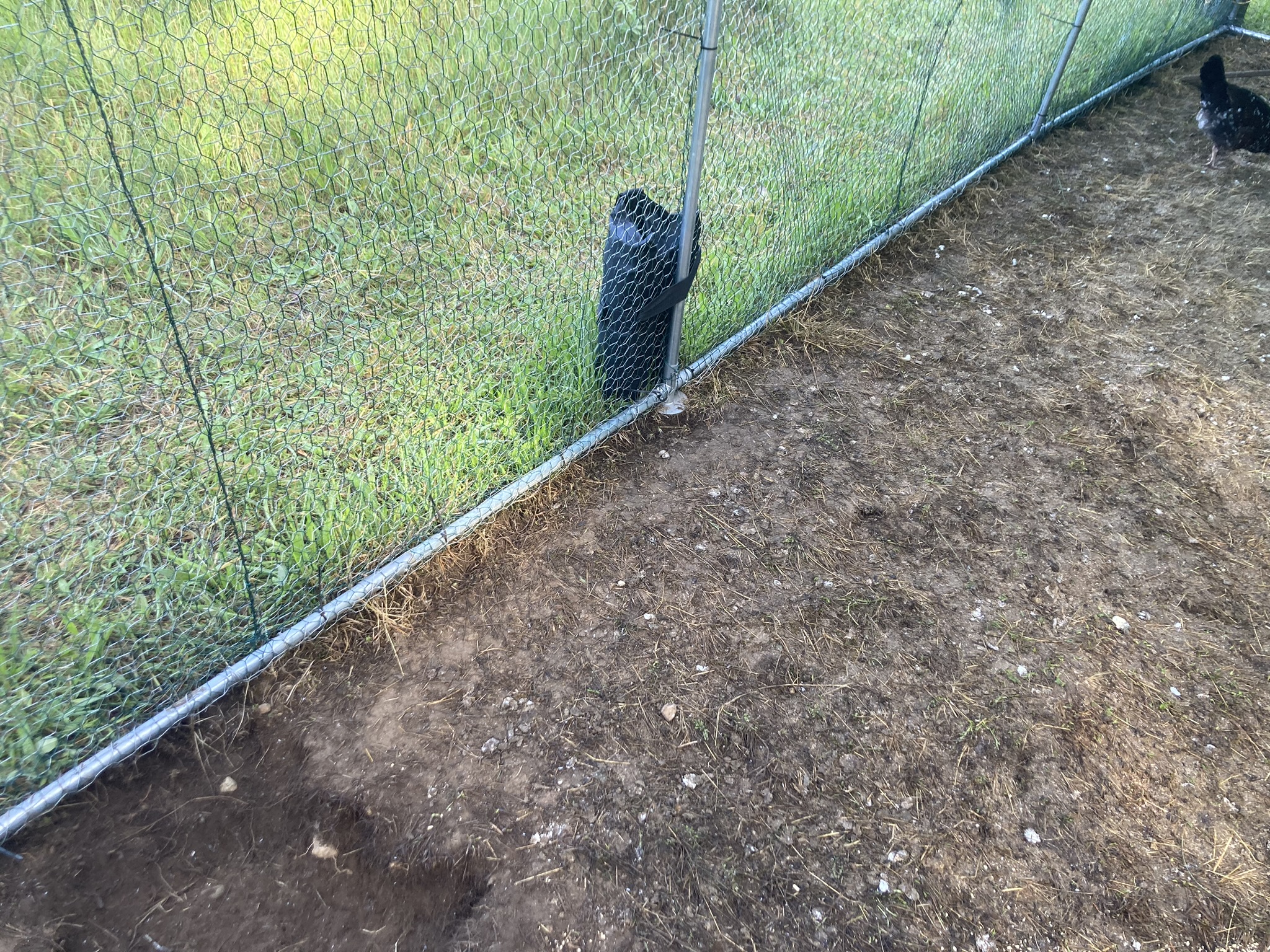
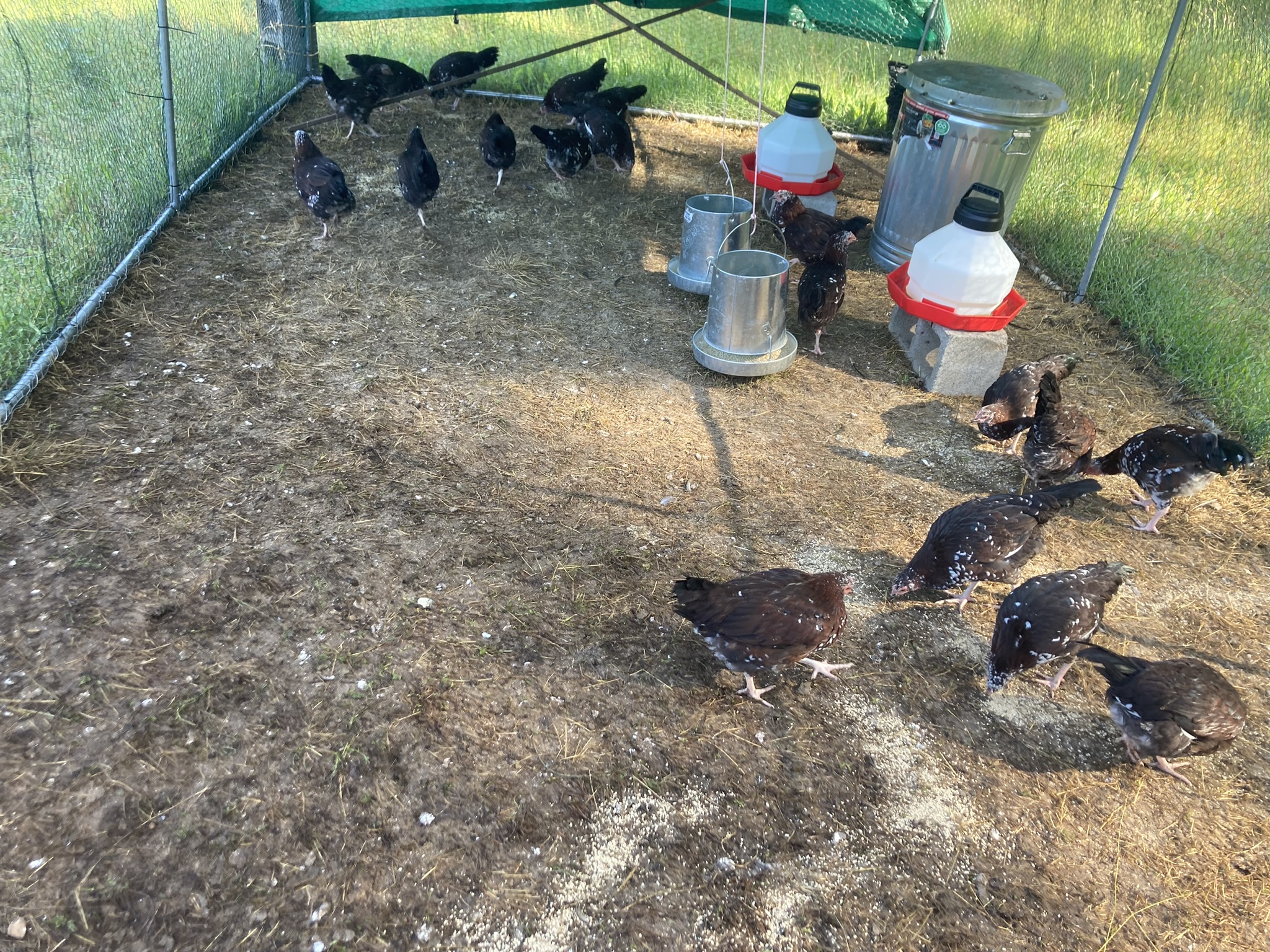
Chickens’ progress clearing pasture grass six weeks in, late May 2024.
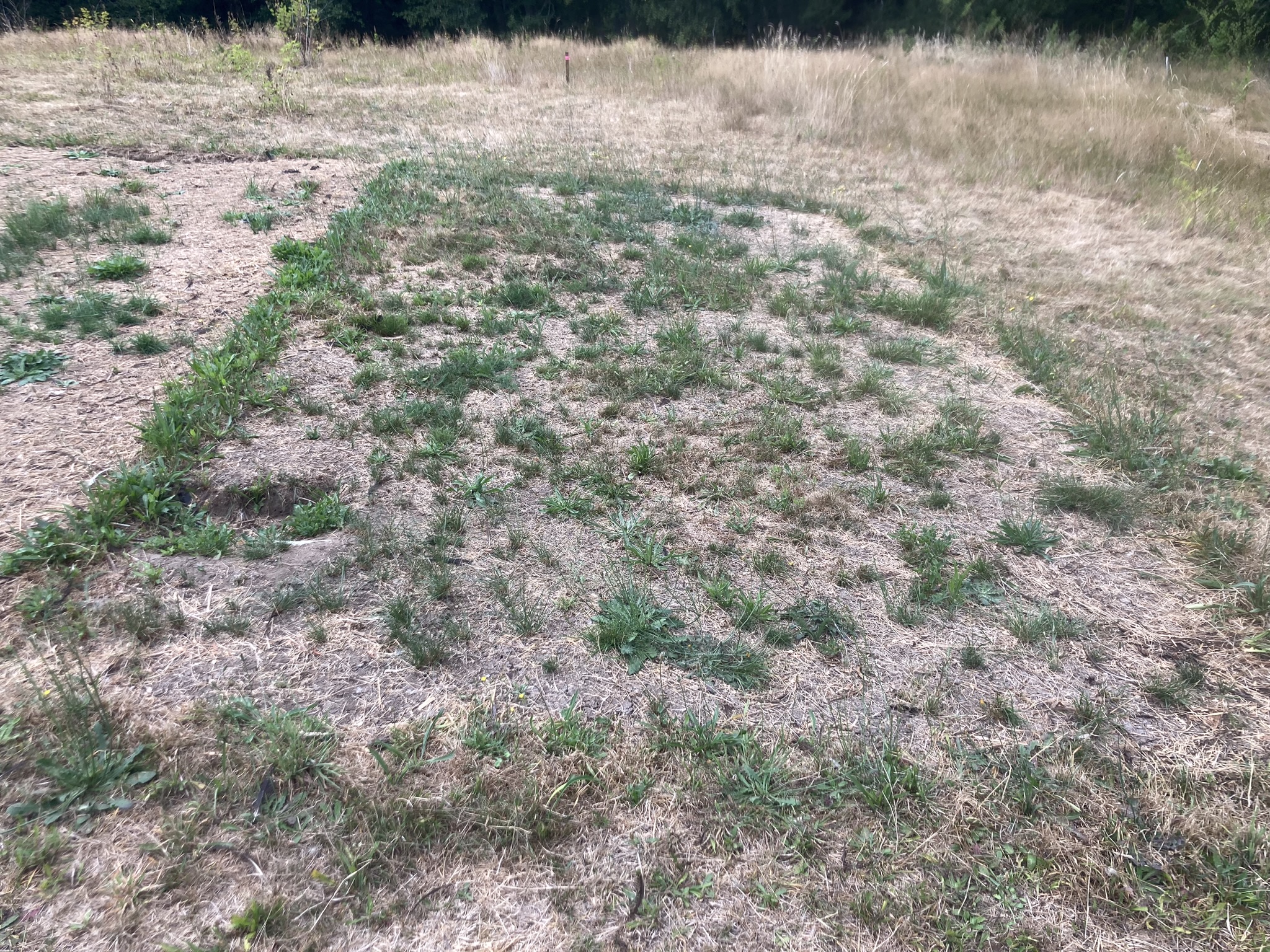
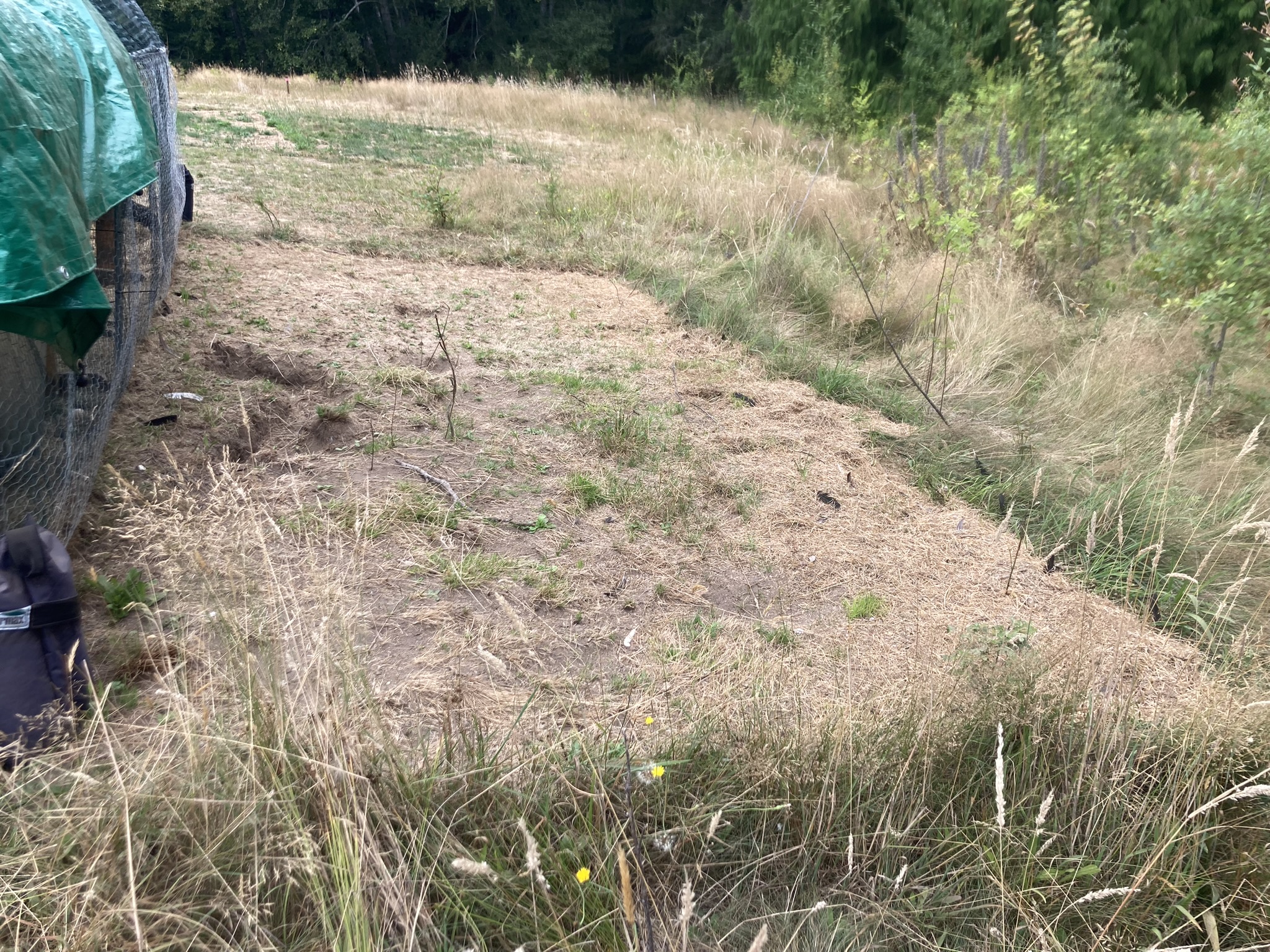
Chicken-grazed area in Aug 2024
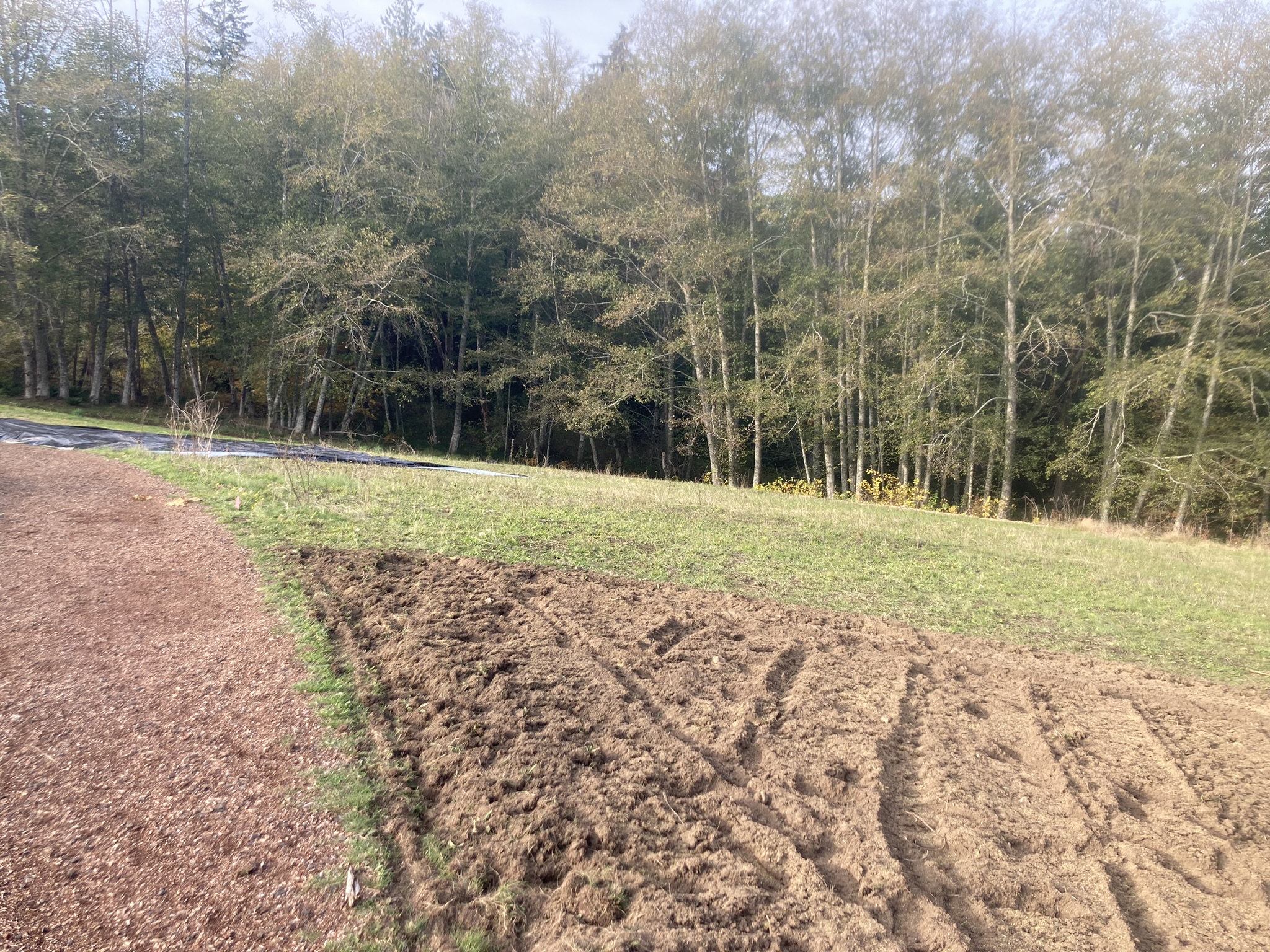
Chicken-grazed area in November 2024. Following the removal of the hens from the meadow (all were re-homed to local families who raise chickens in their back yards), we felt that the grazed area needed further intervention in order to successfully convert to a diverse pollinator-friendly plant community, so we used our tractor and plow attachment to till the area in preparation for planting.
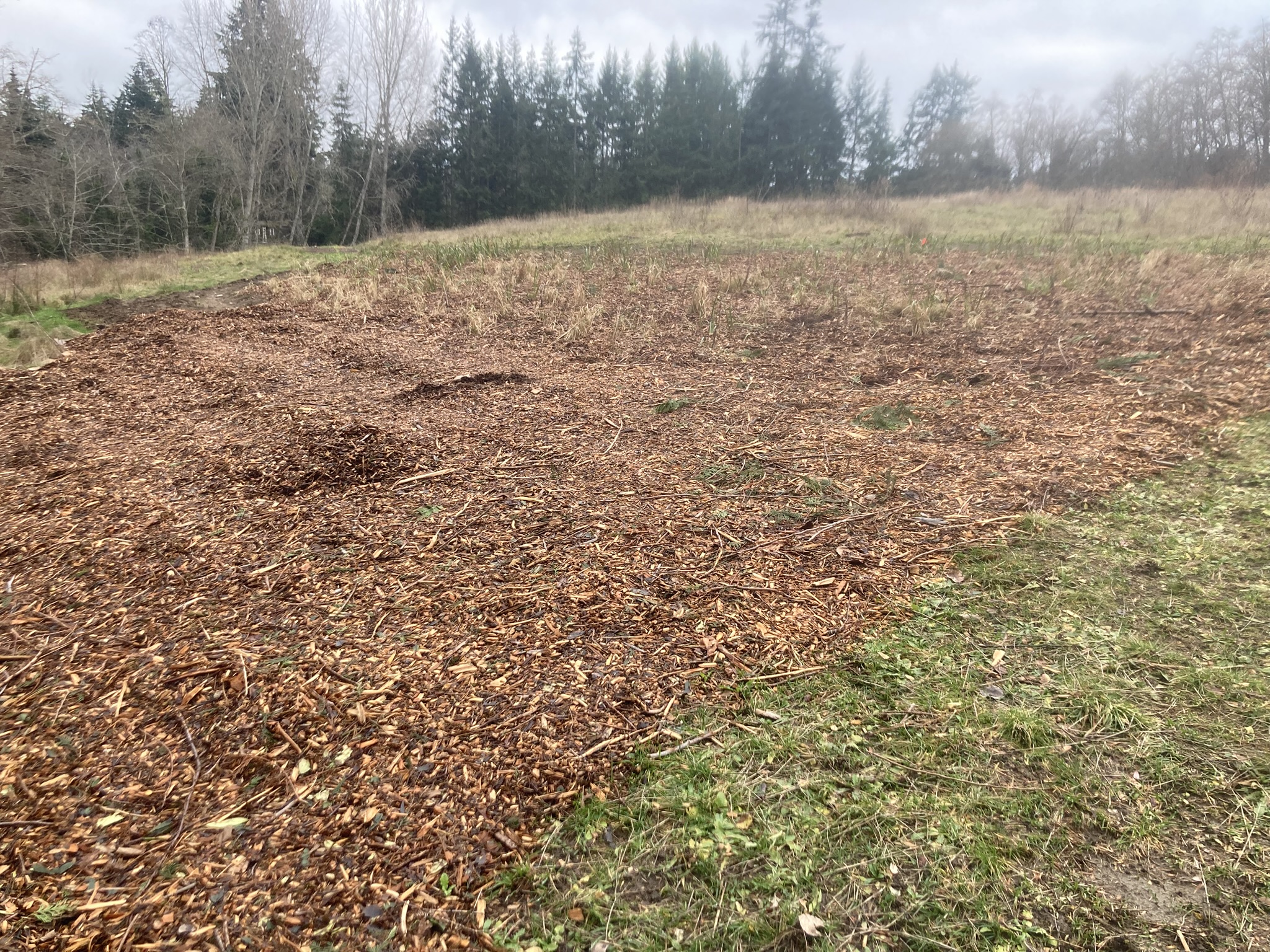
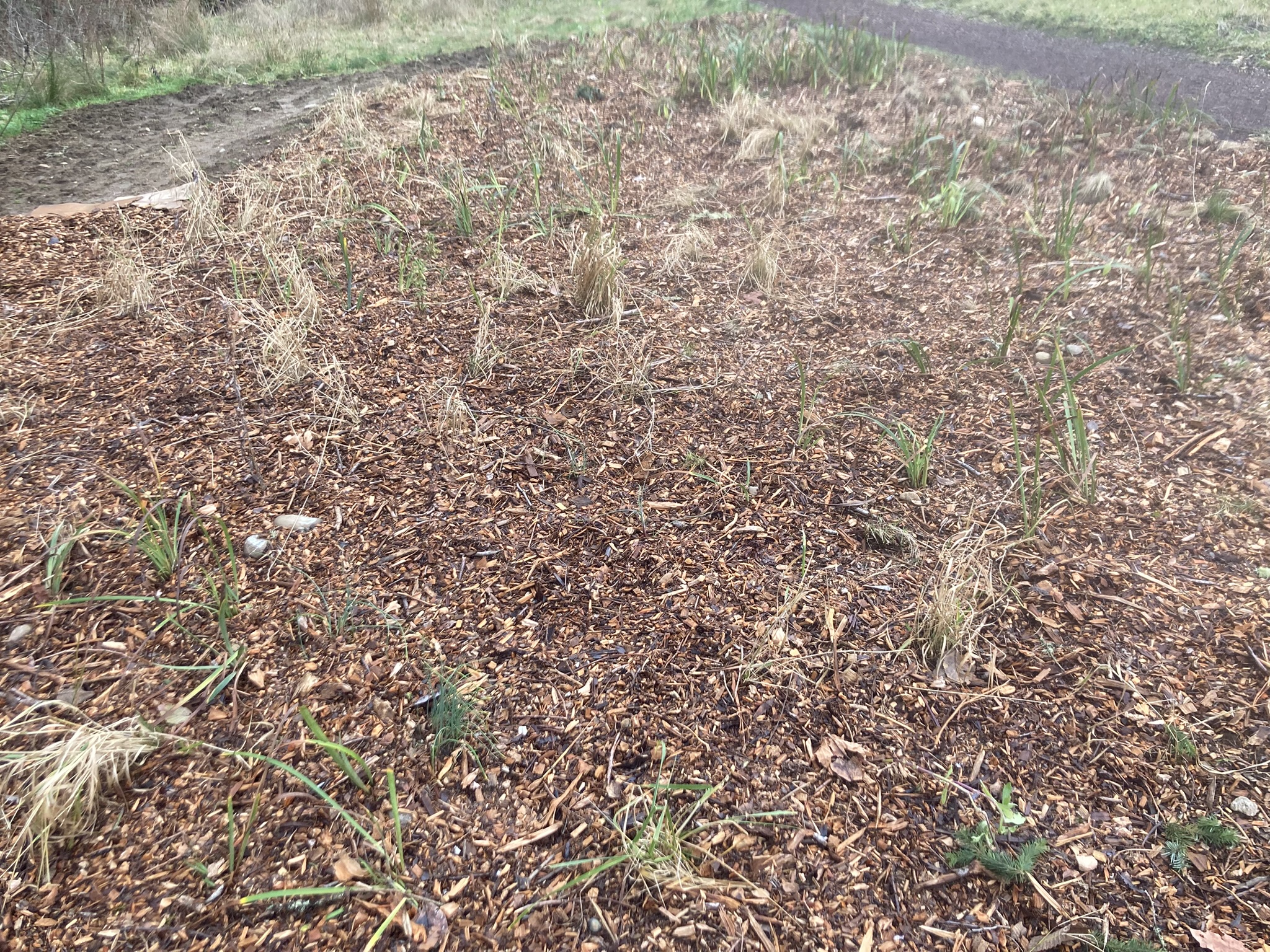
Chicken-grazed area in Jan 2025, following plant installation and application of wood chipped dressing.
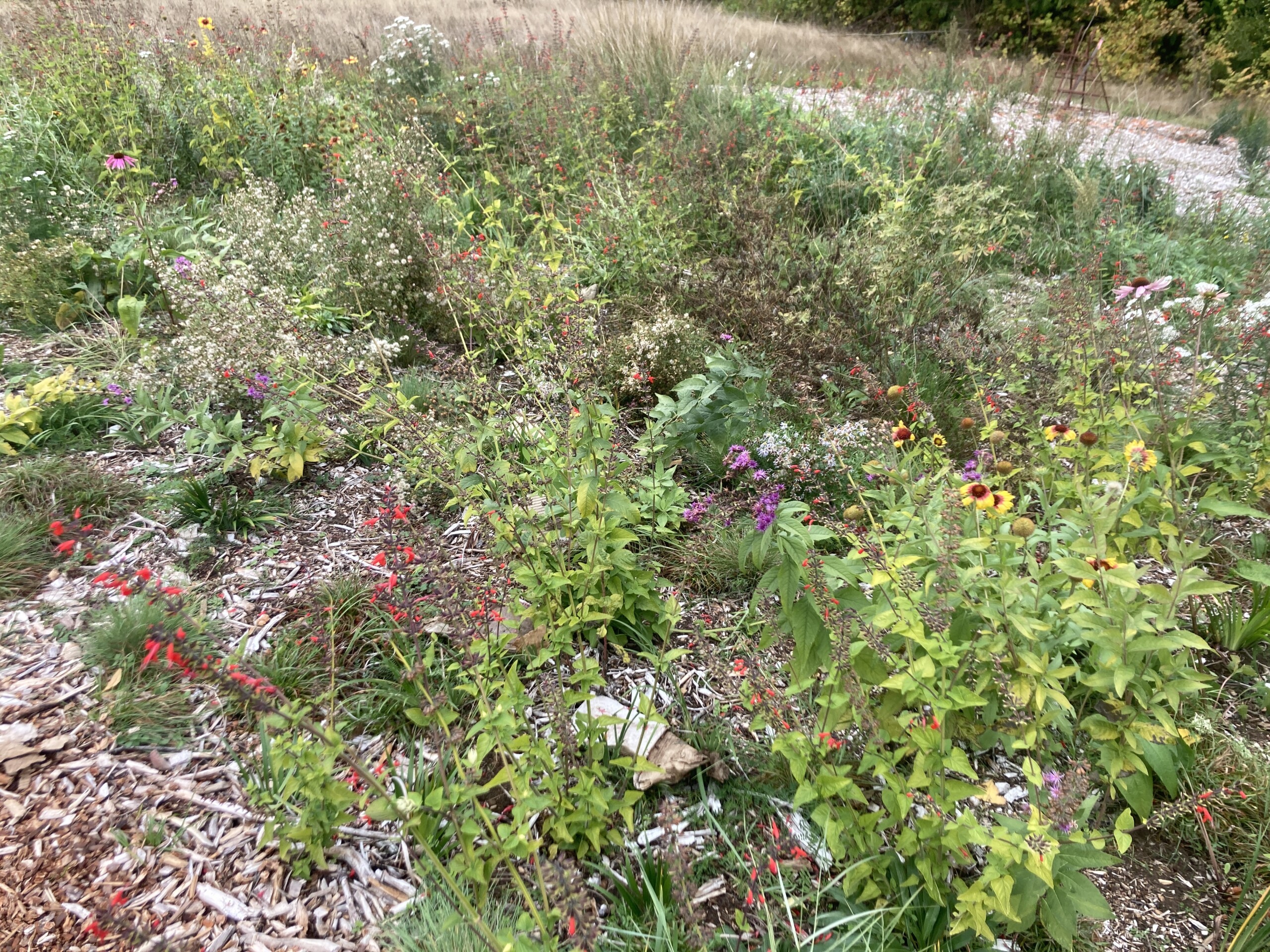
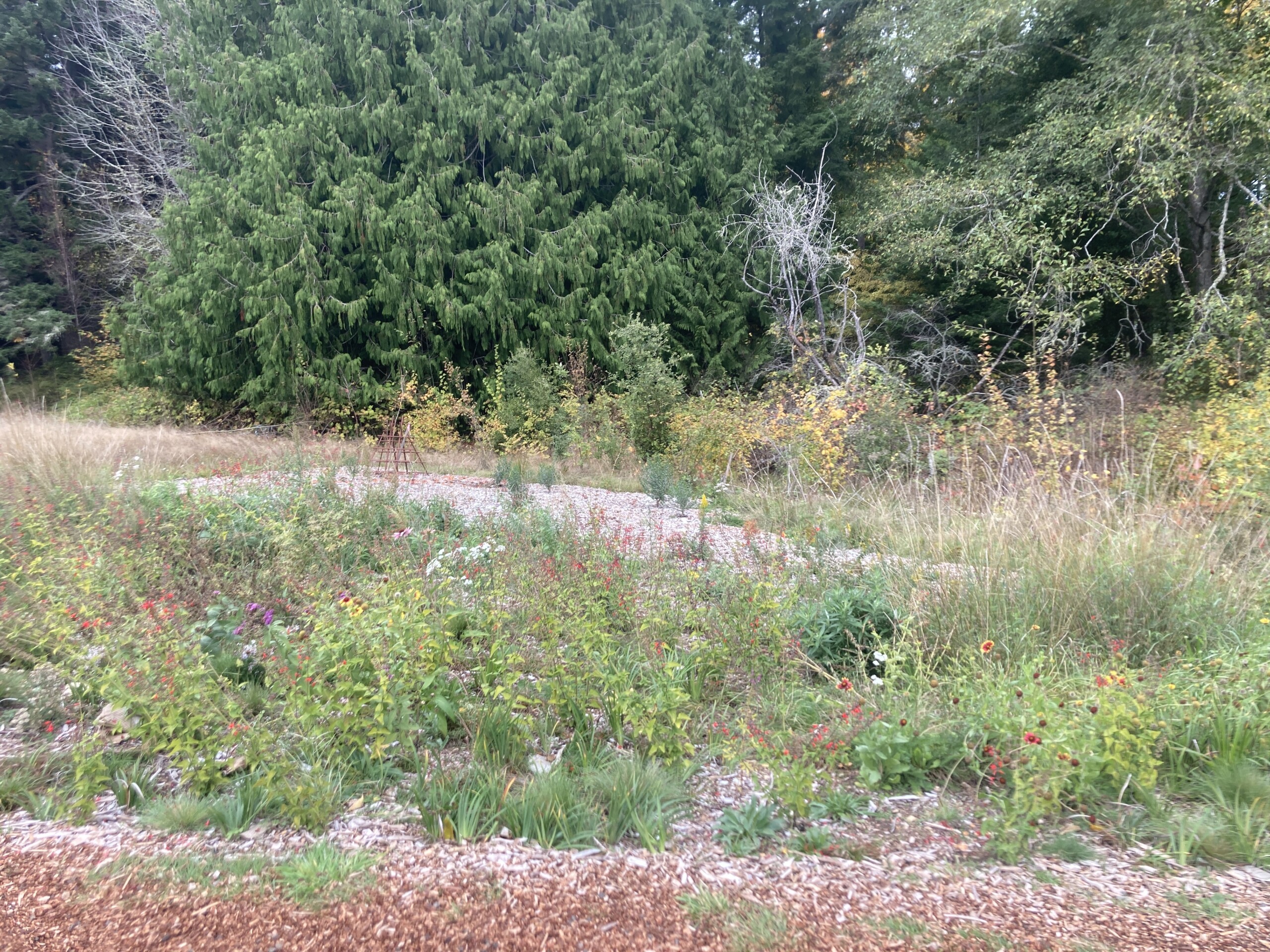
Chicken-grazed area in Oct 2025
Once the fall rains arrived, surviving pasture grasses and broad-leaved weeds broke dormancy, and there were more of them than we had hoped. The undesirable plant community seemed to be recovering rapidly following the removal of the hens from the grazing area, indicating relatively low treatment efficacy. In order to finish converting the treatment area to a diverse, pollinator-friendly selection of plants, we chose to till up and plant the grazed zone with meadow plugs and containers. Chicken droppings have a fertilizing effect and we were concerned that weeds would be promoted at the expense of our North American wildflowers and grasses, however, our plants established well and the area now supports a diverse, bloom-filled section of meadow.
Although our trial was less effective than other treatments we’ve experimented with, we would consider using chickens for pasture clearing again. We believe that starting the season off with mature hens, who already have mastered the “scratching” behavior that is so damaging to undesirable vegetation, will be more successful than grazing very young hens, who we rarely saw scratching. In addition, we were probably feeding the chickens too much for them to feel the need to do much scratching and foraging. More than one season may also be necessary.
SIGN UP FOR OUR ENEWSLETTER
Stay up to date on all of the events and activities taking place at Bloedel Reserve.